
Last updated November 25, 2026
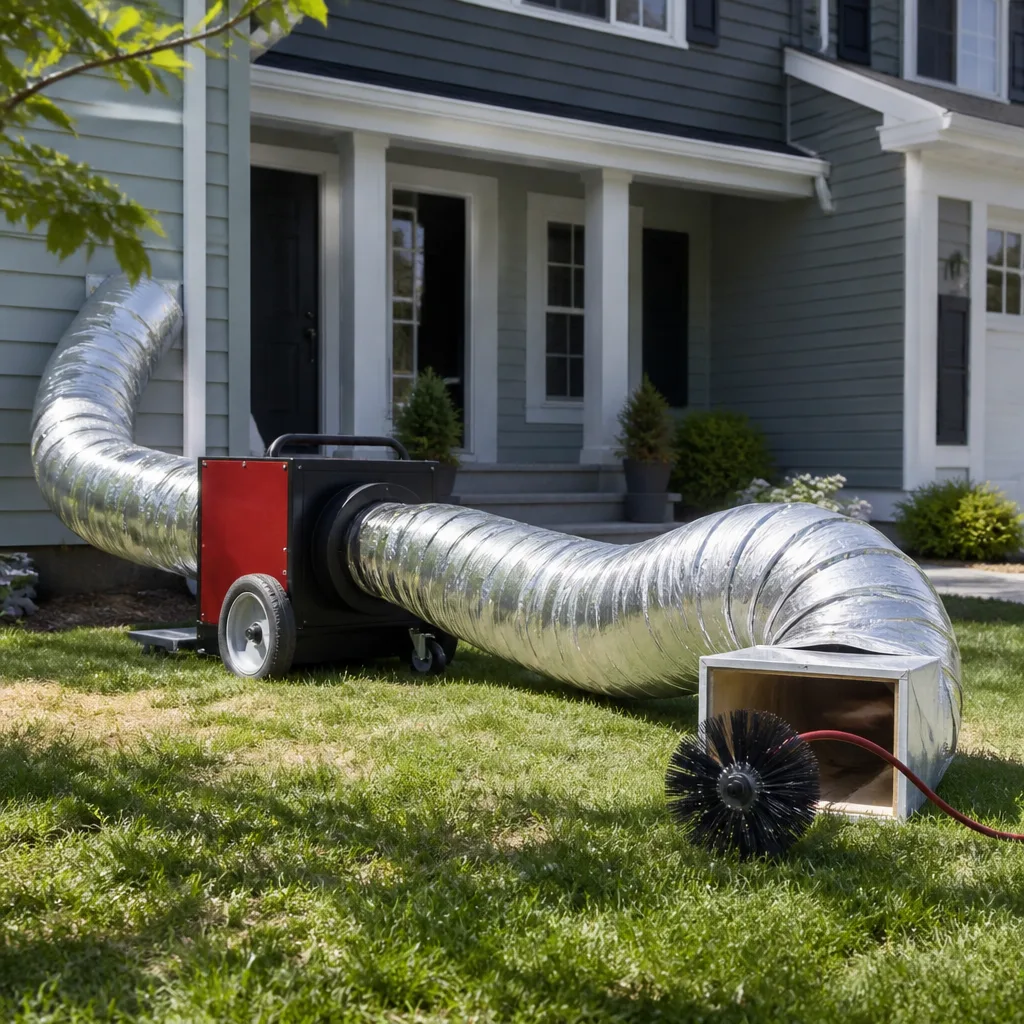 Whole-home duct cleaning
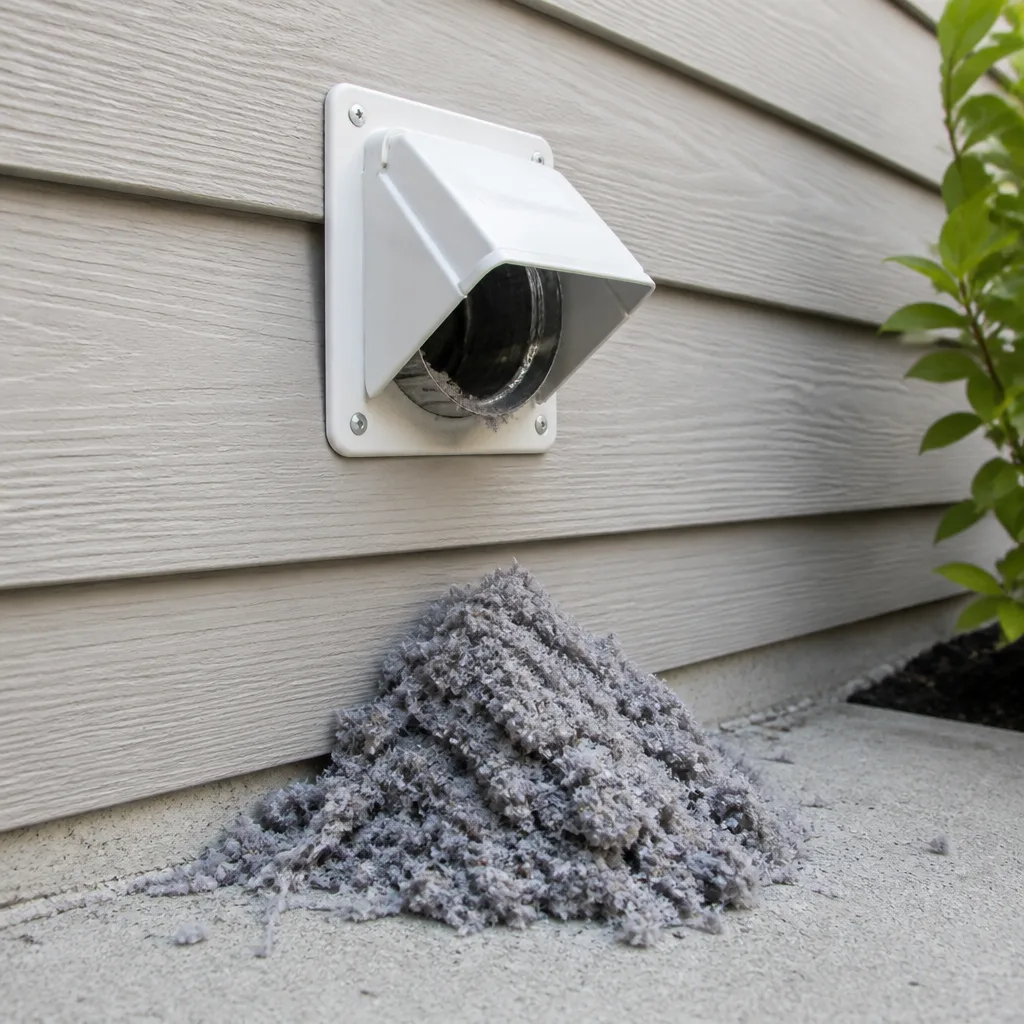 Dryer vent cleaning
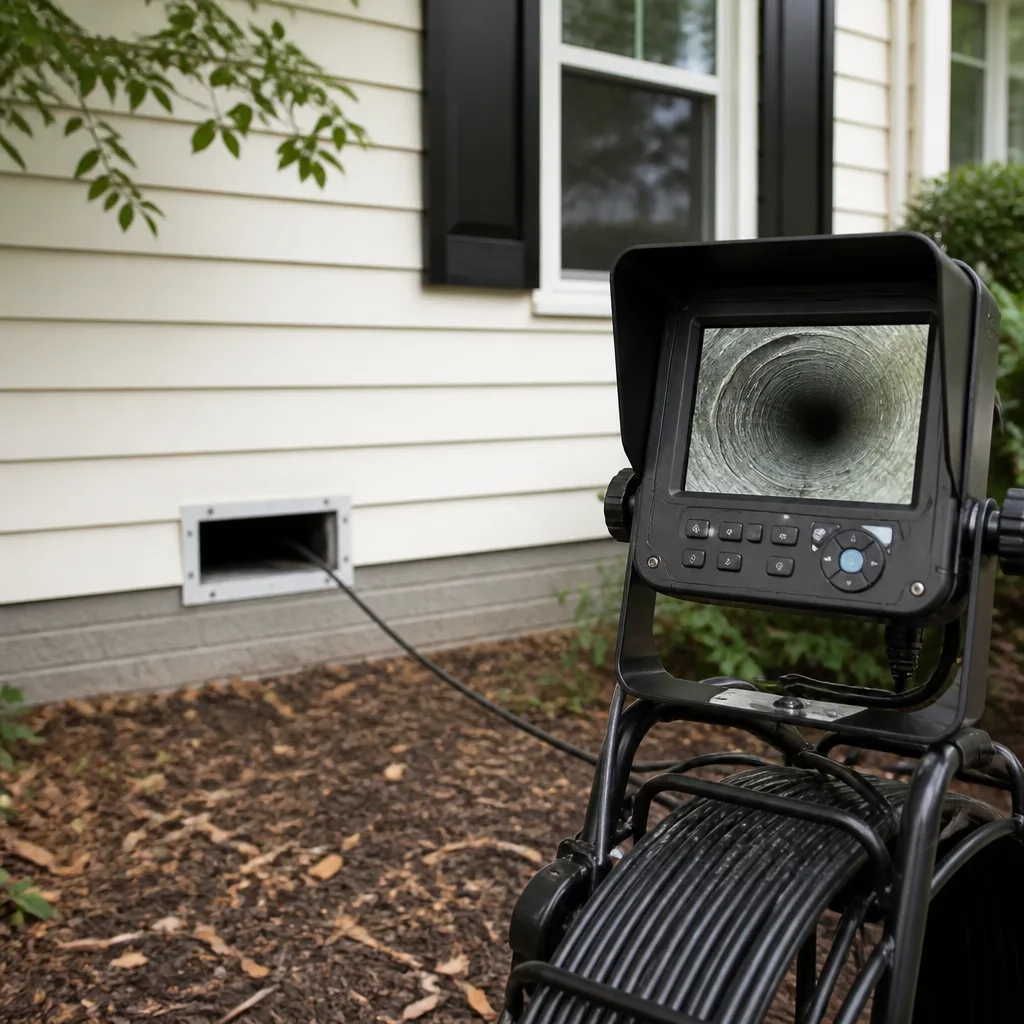 Camera inspection
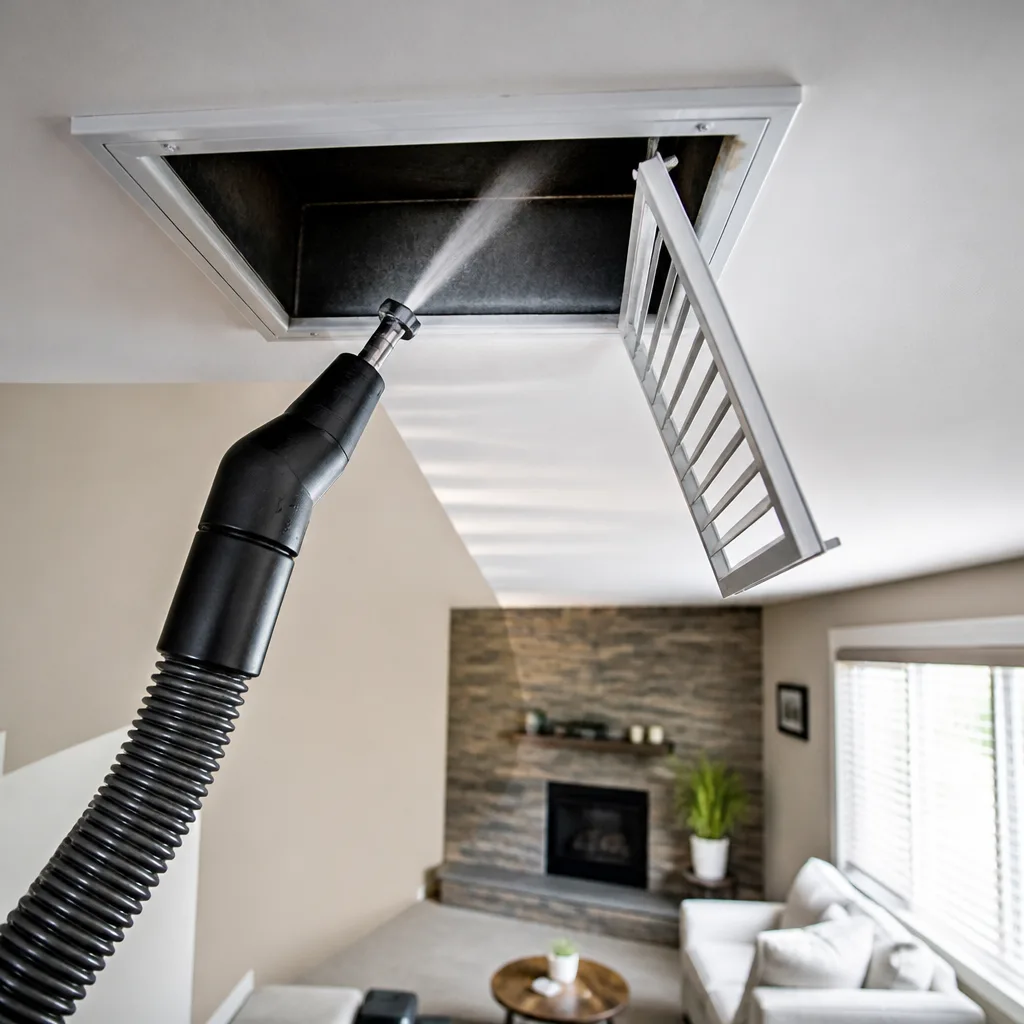 Sanitizing & deodorizing
Whole-system duct and dryer vent check with before-and-after photos - you see exactly what came out of your vents
That "$99 whole-house special" is a bait ad - the real number appears once they are in your hallway, or the "clean" is a shop-vac at the register. We photograph the inside of your ducts before and after instead.
How to Hire an Air Duct Cleaning Contractor in Energy Corridor: A Step-by-Step Guide
There is no state license required to call yourself an air duct cleaner in Texas. That single fact explains most of what goes wrong in this trade. Anyone can print a business card, build a website, and knock on doors in Energy Corridor with equipment that costs less than a used lawnmower. The legitimately skilled full-system specialists and the bait-and-switch operators use nearly identical marketing language, which means the burden of vetting falls entirely on you. This guide gives you the specific interview questions, verification steps, and quote-reading skills to tell the two apart before anyone enters your home. We’ll walk through what certifications matter, what a real scope-of-work agreement looks like, and what documentation you should hold in your hand when the job is finished.
Quick Answer
To hire an air duct cleaning contractor in Energy Corridor, verify three things before booking: the company’s membership in a recognized industry association like NADCA, whether they carry HVAC-specific insurance (not a general handyman policy), and whether they inspect your system in person before quoting. Ask what equipment they bring, how they protect your floors and furnishings, and what documentation you’ll receive afterward. A legitimate contractor inspects first, quotes a defined scope of work in writing, and hands you before-and-after photos plus a service report when the job ends. Anyone who quotes a flat price over the phone without seeing your system, or who won’t put scope in writing, gets crossed off your list.
Styles & brands we work with
- Whole-home duct cleaning
- Dryer vent cleaning
- Camera inspection
- Sanitizing & deodorizing
Table of Contents
- Why There’s No License – and What That Means for You
- The Three Credentials That Actually Signal Competence
- Questions to Ask Before You Book Anyone
- How to Read an Air Duct Cleaning Quote
- Scope of Work vs. Verbal Estimate: Why It Matters
- Post-Service Documentation You Should Receive
- What Professional Equipment Actually Looks Like
- Common Mistakes to Avoid
- When to Call a Professional
Why There’s No License – and What That Means for You
Texas does not issue a license for air duct cleaning. That’s not a loophole; it’s simply how the trade is classified. Unlike electrical work or plumbing, duct cleaning isn’t regulated by a state board that verifies training, testing, or continuing education. In practical terms, this means the barrier to entry is a vacuum and a phone number.
For Energy Corridor homeowners, this creates a specific problem. The neighborhood has a steady mix of newer construction and homes that have been through several HVAC cycles, and the dense concentration of townhomes, mid-rises, and single-family properties means plenty of ductwork that’s been installed, modified, and extended over time. Some of that work is clean; some is not. A contractor who doesn’t understand how a system is laid out can cause more problems than they solve by dislodging debris into the wrong sections of the run or by failing to reseal access points.
Since no state authority vets the person at your door, the vetting burden shifts entirely to you. That’s not as intimidating as it sounds. The industry does have a recognized professional association (NADCA, the National Air Duct Cleaners Association), and it does have standards for how cleaning should be performed and documented. A contractor who has voluntarily aligned with those standards is telling you something. A contractor who hasn’t, and who can’t articulate why, is telling you something too.
What you’re screening for, then, isn’t a license that doesn’t exist. It’s evidence of training, insurance coverage specific to the work, and a willingness to put their scope in writing. Those three signals do most of the work in separating professionals from operators.
The Three Credentials That Actually Signal Competence
Not every badge a company displays means the same thing. Plenty of contractors claim to be “certified” without specifying by whom or in what. Here are the three credentials that carry real weight when you’re choosing an air duct cleaning Energy Corridor provider.
1. NADCA Membership
NADCA (the National Air Duct Cleaners Association) is the recognized trade body for this industry. Membership means the company has agreed to a code of ethics and has access to the association’s standards for assessment, cleaning, and restoration of HVAC systems. It’s not a government license, but it’s a voluntary commitment that weeds out the bottom of the market. Ask for proof of membership and the membership type.
2. EPA-Approved Sanitizer Training
If the company offers sanitizing or treatment for biological contaminants, ask whether the products they use are EPA-registered and whether the technicians are trained in their application. Products like Abatement Technologies and Guardsman lines are industry-recognized, but the training to apply them correctly matters as much as the product itself. Sanitizing without proper containment is closer to a spray than a service.
3. HVAC-Specific Insurance
General liability coverage is a starting point, but the more relevant question is whether the contractor carries insurance that specifically covers HVAC systems and ductwork. If they cause damage to your furnace, air handler, or ductwork during the job, will their policy respond? Ask for a certificate of insurance with the coverage type visible. Contractors who can’t produce one promptly should not enter your home.
One more credential that helps but isn’t strictly required: training on specific professional equipment systems. Rotobrush and Nikro are both recognized names in the trade, and a company that has been trained on these systems is usually a company that has invested in doing the work properly. We use both, and we can walk you through why the equipment matters in the second half of this guide.
Questions to Ask Before You Book Anyone
The phone call before booking is your best screening tool. Here’s what to ask, in roughly the order you should ask it. A legitimate contractor will answer every one without hesitation or a sales pivot.
- “Will you inspect my system before quoting?” This is the single most important question. Any company that quotes a final price for duct cleaning over the phone, sight unseen, is doing one of two things: padding the estimate, or planning to inflate it once they’re inside. A proper quote requires seeing the layout, the number of runs, the state of the return plenum, and whether the system has any damage.
- “What equipment do you bring?” Professional duct cleaning requires negative-pressure equipment and a truck-mounted or high-powered vacuum system that can pull debris out of the system rather than just brushing it loose inside. Rotobrush and Nikro systems are industry-standard for agitation and extraction. A shop vac and a spinning brush is not enough for a whole-house system.
- “How do you protect my home during the job?” Ask about floor runners, corner guards, covering of furniture, and how they handle the vacuum exhaust so that debris isn’t released into the living space. A contractor who hasn’t thought about containment is a contractor who will leave you with a larger mess than you started with.
- “What’s in your scope of work?” Request that the quote itemize what’s covered: how many supply and return runs, whether the air handler gets cleaned, whether registers and grilles are removed and washed, whether the job includes sanitizing, and what happens if they find damaged ductwork during the job.
- “Who is coming to my home?” Ask whether the technicians are employees or subcontracted, and whether they’ve been background-checked. This is a person entering your home and accessing your HVAC system.
- “What documentation do I get when you’re done?” Before-and-after photos, a written service report, and a summary of what was found are all reasonable expectations.
- “Are you insured for HVAC work?” And then ask for the certificate before the appointment.
If any answer is vague, evasive, or pivots to pricing rather than scope, you have your answer. The air duct cleaning company that answers these questions clearly has usually been asked them before and has a clear process.
How to Read an Air Duct Cleaning Quote
A quote is a scope document disguised as a price. The line items tell you what the contractor actually intends to do. Here’s how to read one.
Start with the structure. A legitimate quote itemizes the work. It names the number of supply and return runs, states what will be done at the air handler, specifies whether registers and grilles are removed and cleaned, lists any sanitizing or sealing work as separate line items, and includes a clear description of the equipment being used. If the quote you receive is a single number with no line items, treat it as a starting point for a conversation, not a final price.
Here’s the rough breakdown of what the line items should cover:
- Supply duct cleaning: how many runs, what agitation and extraction method, and how the technician handles transitions and turns.
- Return duct and plenum cleaning: sometimes lumped with supply, sometimes separate. Ask.
- Air handler or furnace cleaning: should be explicitly included or explicitly excluded. If it’s not mentioned, ask whether it’s covered.
- Register and grille removal and washing: some quotes include it, some don’t. It matters.
- Sanitizing: what product, what application method, and whether it’s required or optional for your system.
- Sealing or repair: if the contractor finds damaged or disconnected ductwork, how is that handled and is it included in the quote or added after inspection?
- Documentation: before/after photos and a written report should be standard, not premium.
The lowest bid in the room is almost always partial service. A price that’s meaningfully lower than the others has to come from somewhere: fewer runs cleaned, air handler skipped, containment skipped, sanitizing skipped, or a technician who plans to spend an hour instead of a day. A few hundred dollars saved on the front end usually ends up costing more in re-cleaning or repair later. When you compare quotes, compare the line items, not just the bottom line. And when you’re ready to see what a full-system scope looks like, our team can walk you through it step by step.
Scope of Work vs. Verbal Estimate: Why It Matters
A verbal estimate is a conversation. A scope-of-work agreement is a document. The difference matters more in duct cleaning than in most trades, because the work isn’t visible to you while it’s happening and the results aren’t easy to verify after the fact.
A scope of work should be in writing and should cover, at minimum:
- The address and a brief description of the system being cleaned (number of runs, system type, layout notes).
- A line-item list of every task included in the job.
- The specific equipment being used.
- What’s explicitly excluded (so you don’t assume something was covered when it wasn’t).
- The procedure for finding and reporting damage: what the technician will do if they find a disconnected joint, crushed duct, or damage at the air handler.
- The final documentation: what photos and written report you’ll receive.
- The agreed price for the defined scope, with a clear statement that additions require your approval.
Never proceed on a verbal estimate. A contractor who won’t put scope in writing is either disorganized or planning to change the scope later. Either way, you need the document. This is especially true in Energy Corridor, where ducted systems in townhomes and mid-rise condos often have more complex layouts than a standard single-family home, and “a few extra runs” can turn into a much bigger job than expected. Get the scope in writing so both sides know what they’re agreeing to.
One practical point: asking for a written scope isn’t distrust. It’s ordinary business. Contractors who are organized enough to do quality work are organized enough to write a scope statement.
Post-Service Documentation You Should Receive
When the job ends, you should be holding three things: before-and-after photos, a written service report, and a summary of anything the technician found that you should act on. Here’s what each one does for you.
Before-and-after photos. These are your evidence of work performed. Ask for photos of each major section: air handler, return plenum, representative supply runs, and the register faces. Photos that show only one section aren’t enough to demonstrate the whole system was cleaned. In our experience, a real full-system job produces a set of photos that take a minute or two to review, not a single frame that’s been staged.
Service report. A written record of what was cleaned, what equipment was used, and any anomalies noted. This is also the document that lists any findings: disconnected joints, crushed flex runs, microbial growth, damaged insulation, or evidence of pest intrusion. Keep this report. It’s your record if you ever sell the home or need to file an insurance claim for related damage.
Summary of findings. Beyond the checklist, you should get a plain-language explanation of anything that needs attention. If the technician found a disconnected joint in the return, that’s a real finding and should be written down, not just mentioned in passing on the way out. If they recommend additional work (sealing, sanitizing, dryer vent service), it should be in writing with a clear explanation of why. You’re the one who decides whether to proceed – but you should have the information in hand.
If a contractor completes the job and leaves without photos or a report, that’s a red flag. Legitimate contractors document their work because it protects them as much as it protects you.
What Professional Equipment Actually Looks Like
The equipment on the truck is one of the clearest signals of whether a company is a full-system specialist or a one-tool operation. Here’s what to look for.
Professional duct cleaning requires three things that consumer-grade equipment can’t provide: enough vacuum power to pull material out of the system (a shop vac won’t do this on a whole-house system), a way to agitate debris on duct surfaces so it can be extracted, and containment so the debris doesn’t end up in your living room.
Rotobrush and Nikro are two of the industry-recognized names in agitation and extraction equipment. Both are designed for residential and light commercial duct cleaning and both require training to use correctly. A company that shows up with either is usually a company that has invested in doing the work properly.
Containment is the other half of the equipment equation. Ask how the contractor plans to keep the vacuum exhaust out of your living space and how they’ll protect floors, walls, and furnishings during the job. A professional setup includes floor protection, sealed access points, and a way to route exhaust outside the home when possible.
Beyond cleaning, the equipment question extends into repair. Not every duct cleaning company carries what’s needed to repair and re-seal ductwork they find damaged during cleaning. A contractor who can’t repair a disconnected joint or replace a crushed section of flex duct is a contractor who will leave those problems behind and hand you a recommendation to find someone else. When you’re choosing a HVAC cleaning company, ask whether repair and sealing are part of their in-house capability, or whether they’ll need to refer that work out.
Filtration and air quality go hand in hand with cleaning. If a company works with leading filtration brands like Honeywell or Aprilaire, that’s a sign they see the full system, not just the ducts. And if they offer air quality and sanitizing as a distinct service, they’ve thought about what happens after the cleaning is done. That’s the difference between a cleaning and a full indoor air quality assessment.
Common Mistakes to Avoid
- Booking on price over the phone. A quote without an inspection is a guess. In Energy Corridor, where duct layouts vary significantly between townhomes and single-family homes, a phone quote is more likely to be wrong than right.
- Skipping the insurance request. General liability isn’t the same as HVAC-specific coverage. Ask for the certificate before the appointment, not after something goes wrong.
- Accepting a verbal estimate. If it isn’t in writing, it isn’t a scope of work. You’ll have no recourse if the job expands mid-visit.
- Assuming “certified” means the same thing everywhere. Ask which association, which training, and which standard. Vague certification is not a real credential.
- Not asking about containment. Debris that ends up in your living space is a bigger problem than the cleaning was supposed to solve. Ask how they protect your home before they start.
- Not requesting documentation. Photos and a written report aren’t optional extras. Ask for them before booking, and confirm you’ll receive them after the job.
- Comparing bottom-line totals only. The lowest bid in Energy Corridor is usually lower because it covers less. Compare line items, not totals.
When to Call a Professional
Most homes don’t need duct cleaning on a fixed schedule. What matters is the condition of the system, not the calendar. Call a professional when you’re noticing persistent dust buildup on surfaces shortly after cleaning, musty or stale odors when the HVAC system runs, uneven airflow between rooms, higher-than-expected utility bills without an obvious cause, visible debris or pest evidence at registers, or a recent renovation that produced significant drywall dust. If you’ve never had your system inspected and you’ve been in the home for several years, an inspection is a reasonable starting point even if nothing feels wrong yet.
If you’re also noticing the dryer taking longer than it used to, dryer vent cleaning is a separate safety service worth scheduling at the same time. Blocked dryer vents are a recognized fire risk, and it’s a job that doesn’t overlap with duct cleaning but is often needed in the same home.
Air Duct Cleaning Energy Corridor offers free estimates in Energy Corridor. Call (855) 726-7308. We answer 24/7. Fast dispatch from 7am to 7pm, Sunday through Friday.
See the difference
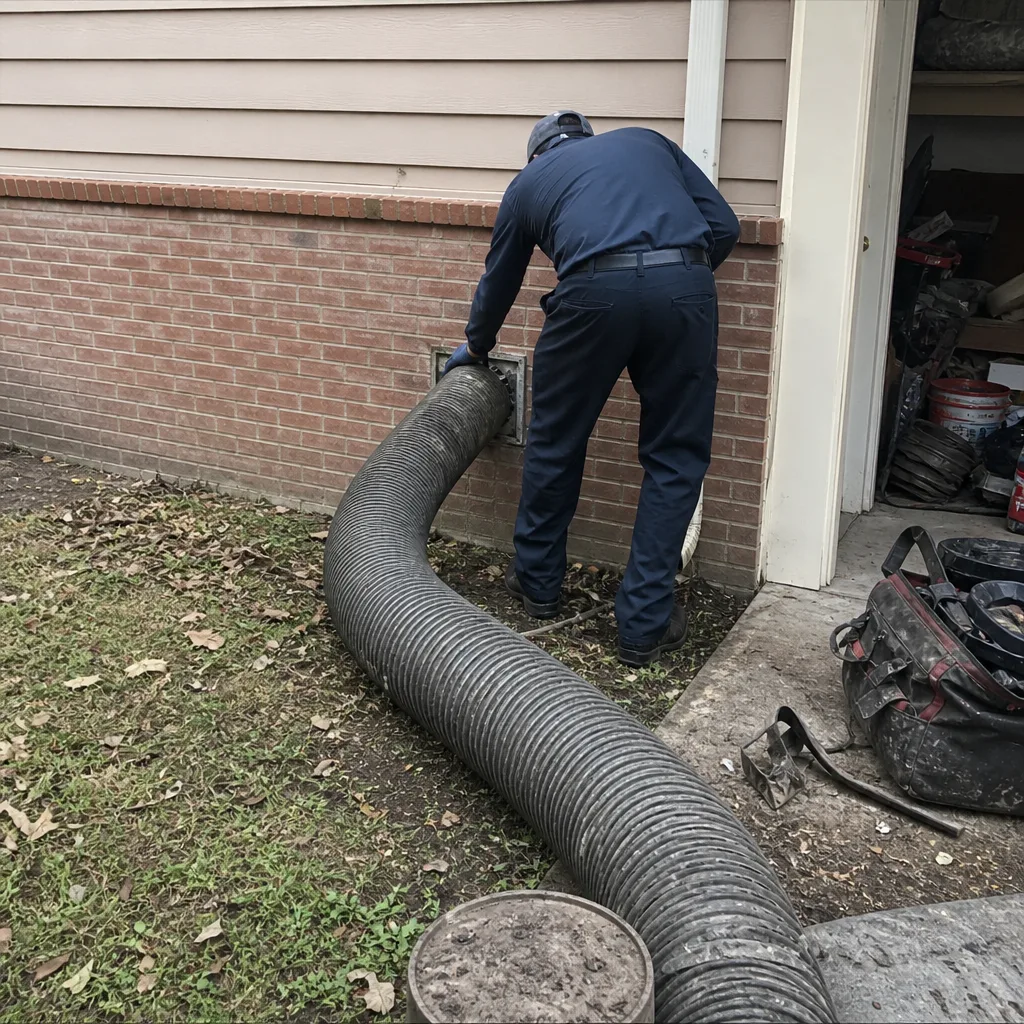 Before
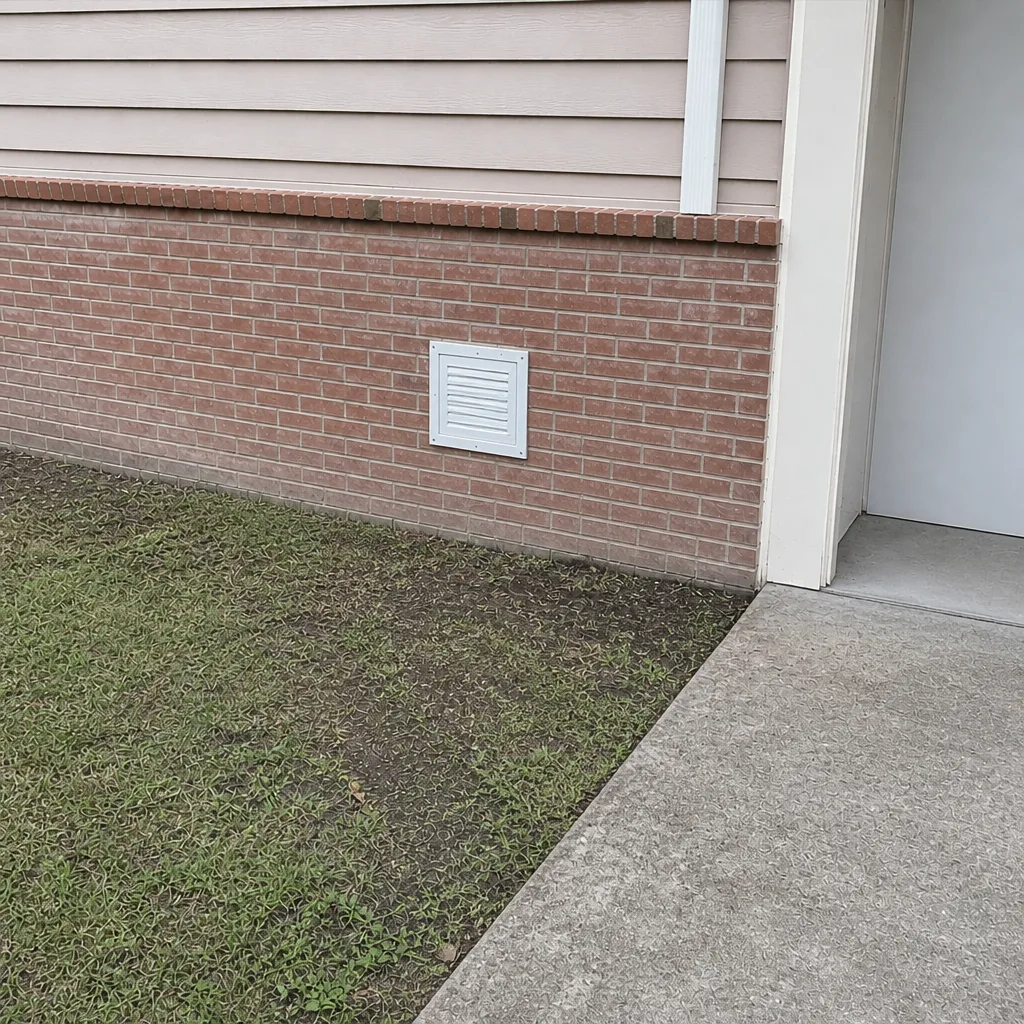 After
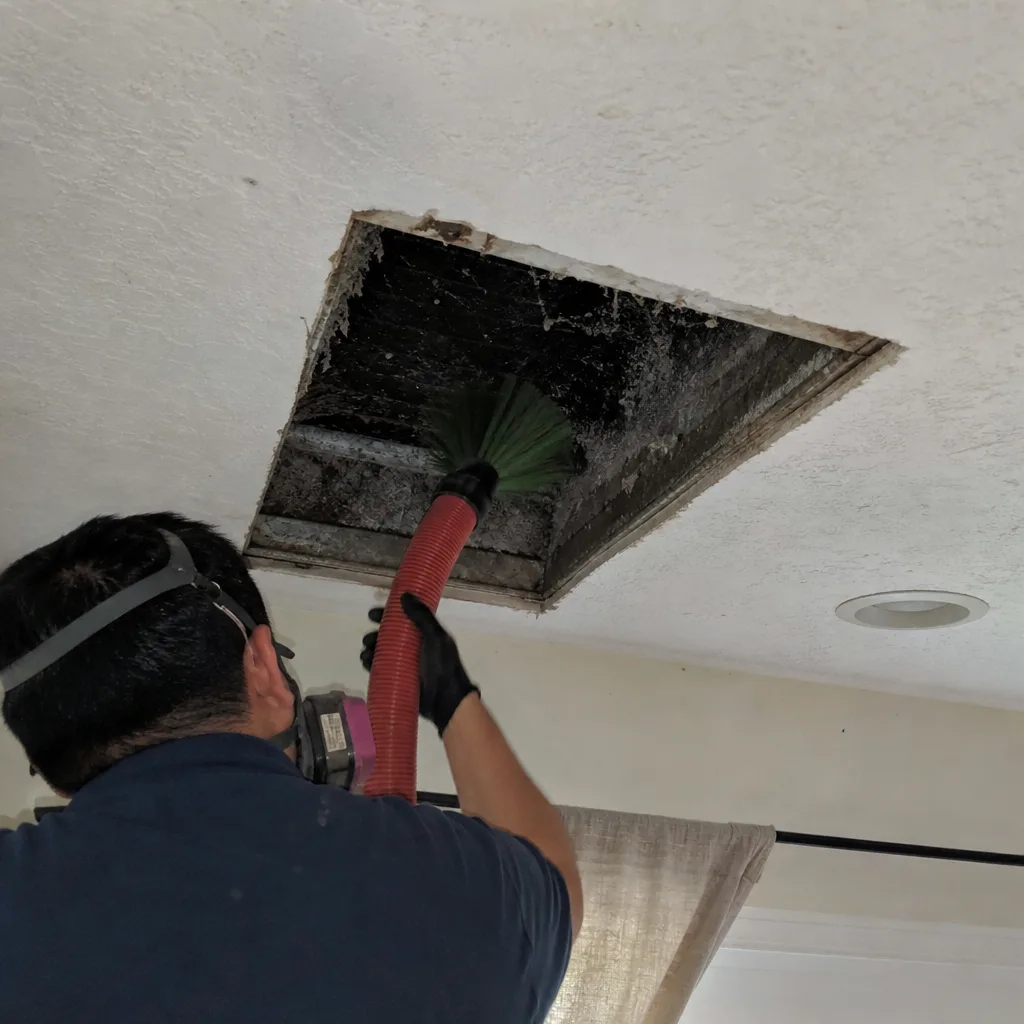 Before
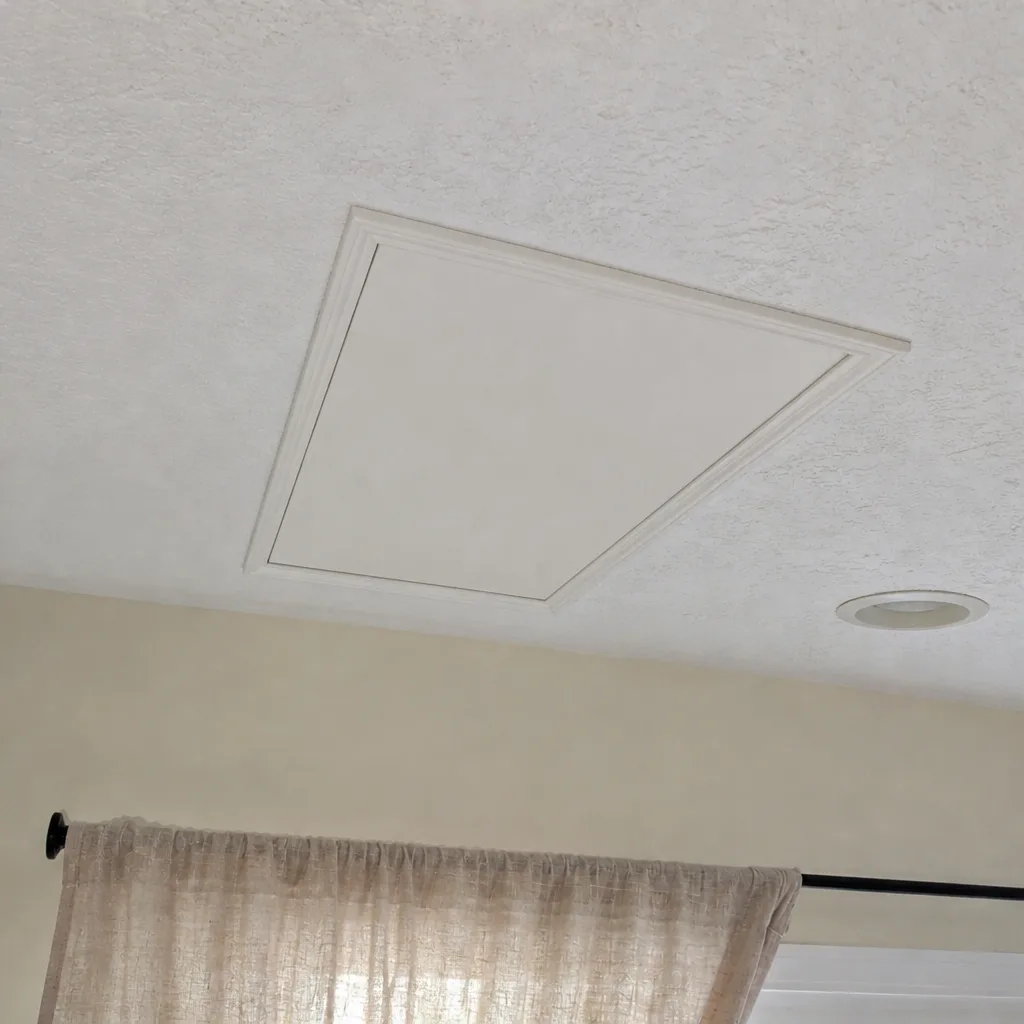 After
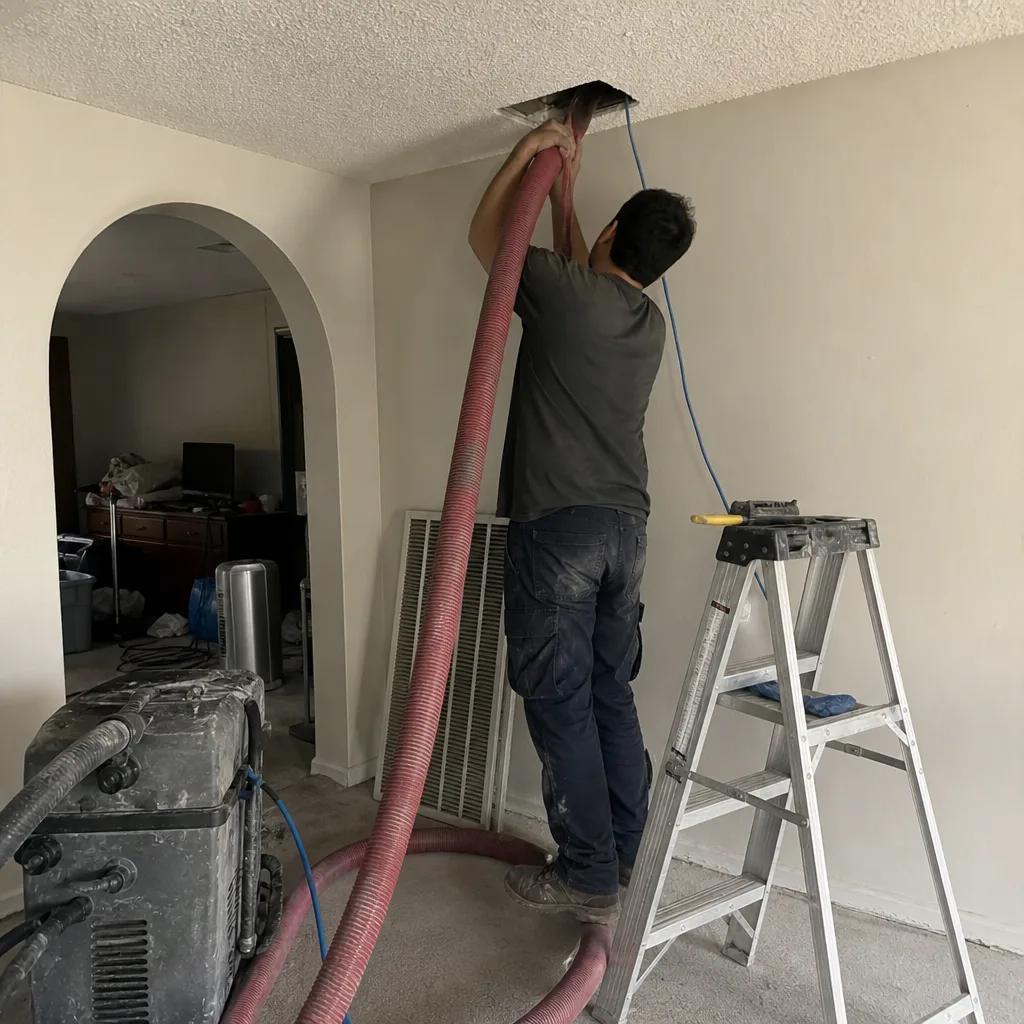 Before
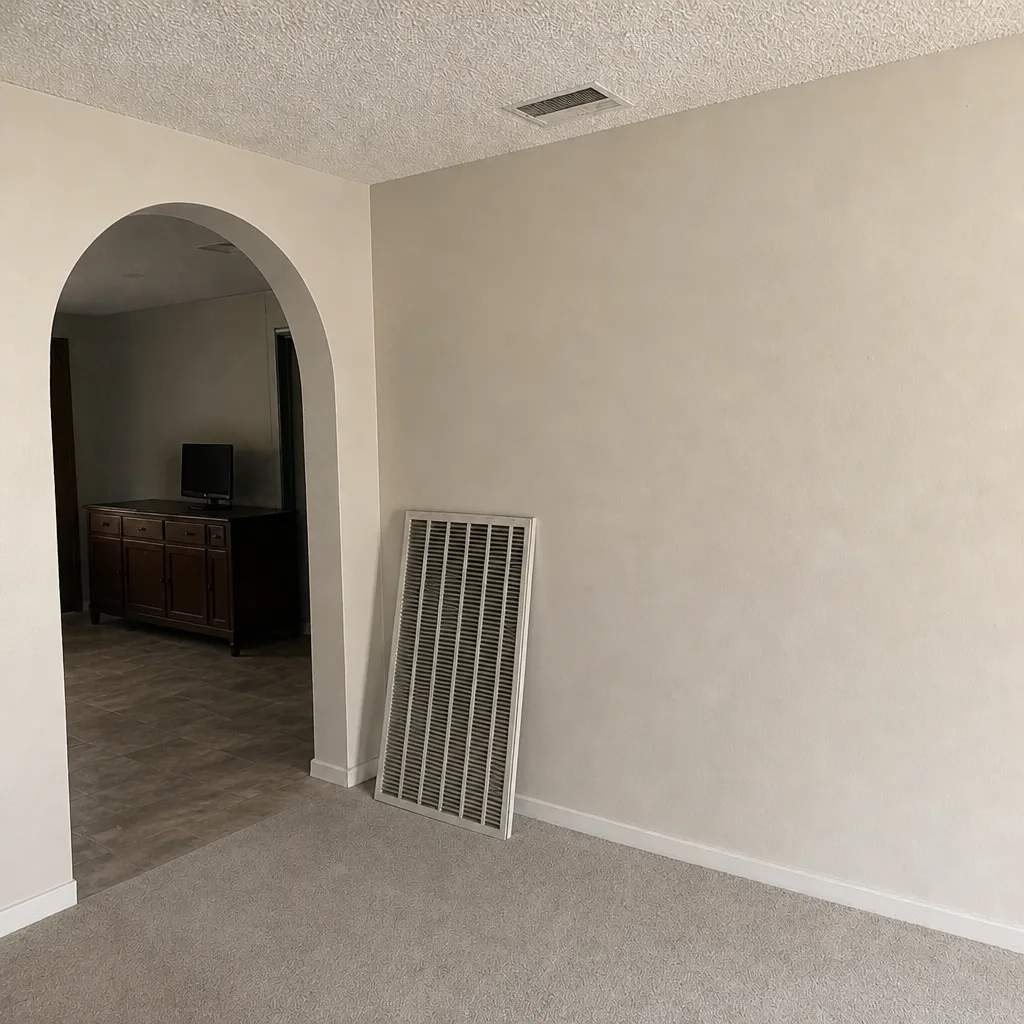 After
Frequently Asked Questions
Pricing is set per job by a written estimate, and the range varies with the size of the system, the number of runs, whether sanitizing or repair is included, and what the technician finds during inspection. Because the industry has no state license and no standard pricing structure, you’ll see a wide range of quotes from different companies. Rather than shop for a number, shop for a defined scope, then compare the line items. Call (855) 726-7308 for a free estimate – estimates are free.
Cheap quotes are almost always partial service. The lower price has to come from somewhere: fewer runs cleaned, air handler skipped, containment skipped, sanitizing skipped, or a technician who plans to be done in an hour instead of a day. In our experience, “we clean the system” means very different things depending on the company. Ask what the low bid includes line by line, then compare. Call (855) 726-7308 for an honest quote on a full scope – estimates are free.
You ask for documentation before booking, and you confirm the deliverables in writing. Before-and-after photos of each major section of the system, a written service report, and a summary of findings should all be part of the job. A contractor who can’t produce these after a cleaning has either done something less than the full job or hasn’t thought about documenting their work. Either way, you should know which before you book. Call (855) 726-7308 to talk through what our documentation includes – estimates are free.
There’s no universal answer. Standard guidance is that a properly installed and maintained system may not need cleaning on a regular schedule, while homes with pets, recent renovations, water intrusion, or pest activity may need it more often. The more useful question is whether your system needs it now. An in-person inspection answers that better than a calendar. Call (855) 726-7308 to schedule a free estimate – estimates are free.
Air duct cleaning itself does not typically require a permit in Texas. If the job involves significant ductwork modification or HVAC system replacement, the rules may differ, and you should check with your local building department. Cleaning and sealing existing ductwork is generally not a permitted activity, but confirm with your city if you’re unsure. Call (855) 726-7308 with questions about the scope of your specific job.
They’re separate jobs, but scheduling them together is common because they often come up in the same conversation. Dryer vent cleaning addresses a fire risk that has nothing to do with duct cleaning, and it’s worth doing if you’ve noticed longer dry times, a hot dryer exterior, or visible lint accumulation around the vent. Call (855) 726-7308 to discuss whether both are needed – estimates are free.
The Bottom Line
Hiring an air duct cleaning contractor in Energy Corridor comes down to verification. No state license means no state verification, so you do the work yourself. Verify NADCA membership, HVAC-specific insurance, and in-person inspection before quoting. Ask what equipment they bring, how they protect your home, and what documentation they deliver. Insist on a written scope of work, not a verbal estimate. Compare quotes by line item, not by bottom line, because the lowest bid in the room is almost always partial service. When the job ends, hold before-and-after photos and a written report in your hand. If you go through those steps, you’ll hire the right contractor. If you skip them, you’ll find out why they mattered.
Our team works with professional Rotobrush and Nikro equipment, offers Duct Repair & Sealing so we can address what we find, and uses Abatement Technologies and Guardsman products for air quality and sanitizing. If you want a free estimate, call (855) 726-7308. We answer 24/7. Fast dispatch from 7am to 7pm, Sunday through Friday.
Written by the team at Air Duct Cleaning Energy Corridor.