
Last updated November 25, 2026
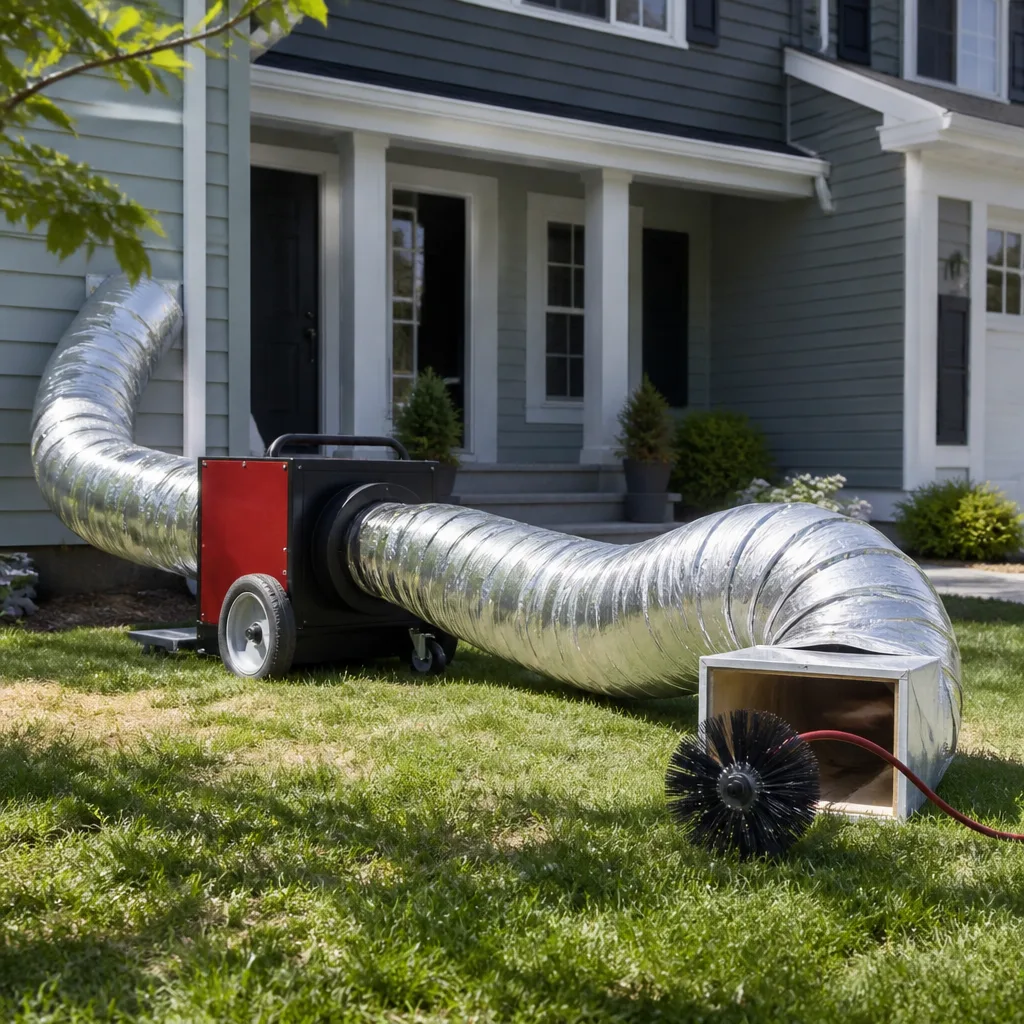 Whole-home duct cleaning
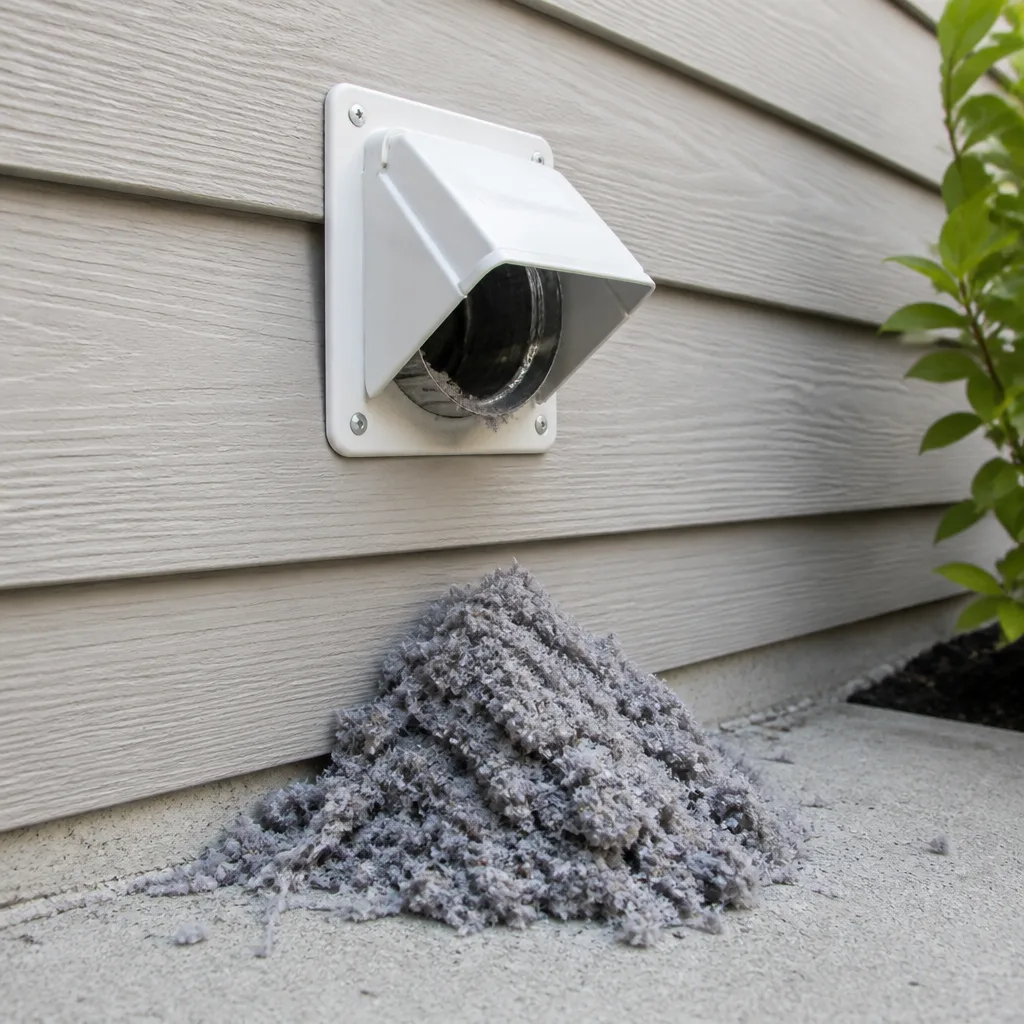 Dryer vent cleaning
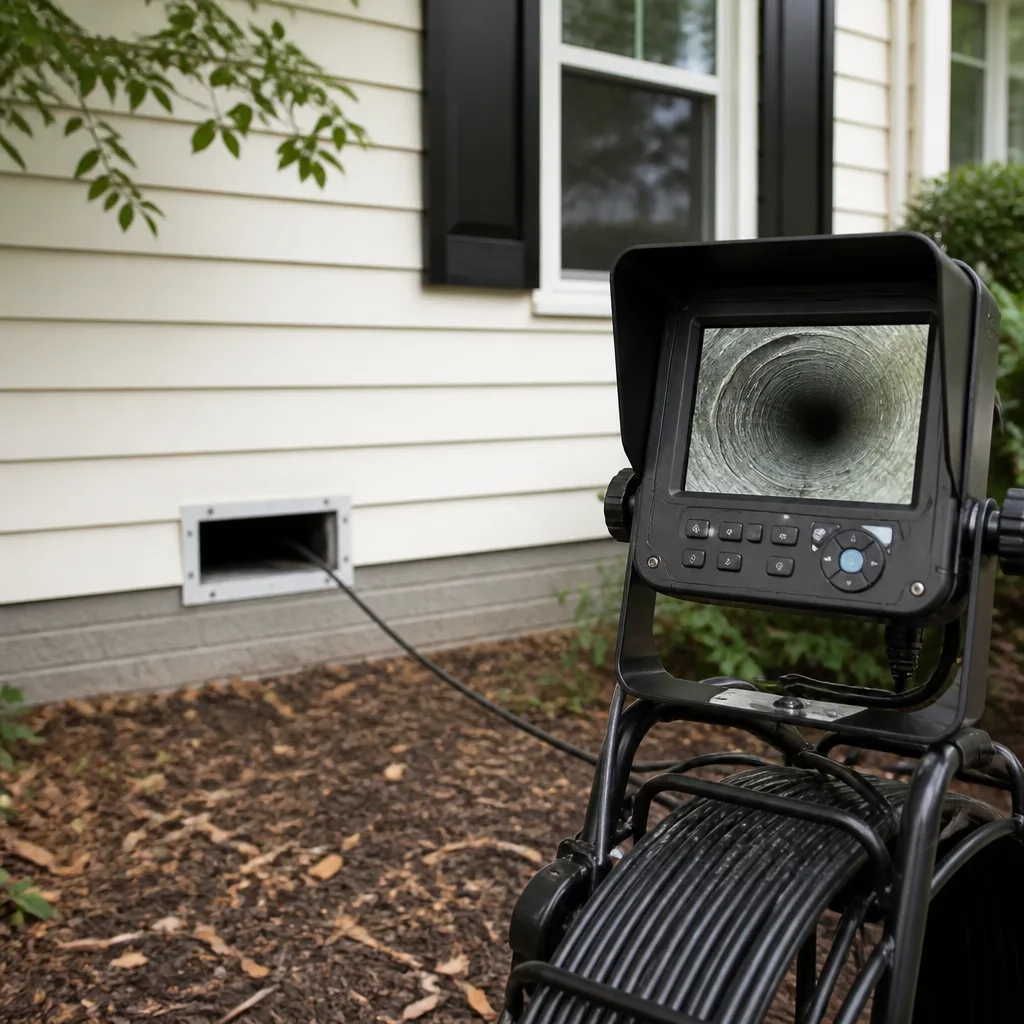 Camera inspection
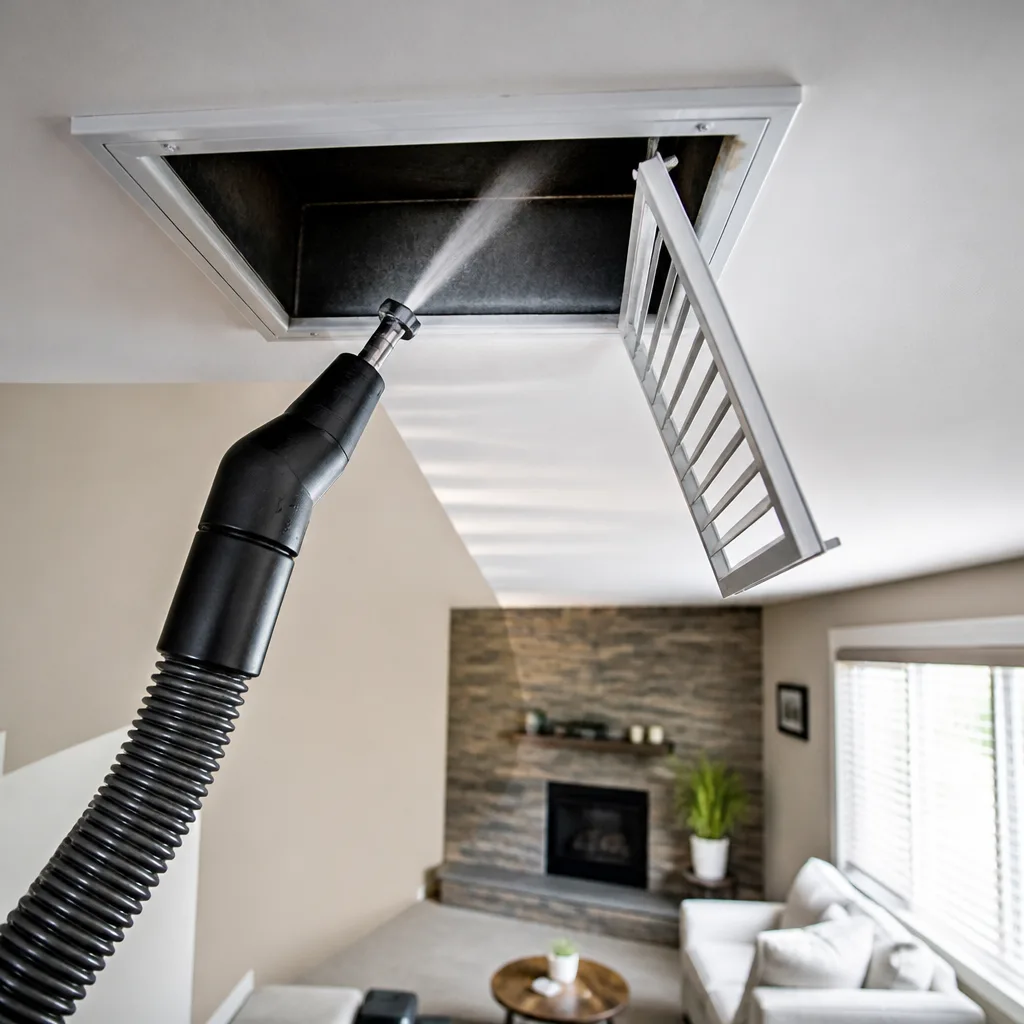 Sanitizing & deodorizing
Whole-system duct and dryer vent check with before-and-after photos - you see exactly what came out of your vents
That "$99 whole-house special" is a bait ad - the real number appears once they are in your hallway, or the "clean" is a shop-vac at the register. We photograph the inside of your ducts before and after instead.
DIY vs Professional Air Duct Cleaning: The Energy Corridor Homeowner’s Decision Guide
Most homeowners assume the only difference between DIY and professional duct cleaning is muscle and time. It isn’t. The real gap is physics: professional systems create and contain negative pressure across the entire duct run, and a shop vac cannot. Hook a shop vac to a floor register and you’ll pull loose dust toward the opening while fine particulate drifts further into the system and into your rooms. This guide explains plainly what you can do yourself, what you cannot, and how Energy Corridor homeowners can combine the two without wasting money or damaging ductwork.
Quick Answer
Homeowners can and should handle register cleaning, filter changes, and dryer vent lint removal themselves. Deep duct cleaning is a different job entirely: it requires high-CFM vacuum systems and rotary agitation tools that consumer equipment cannot match, so calling a professional is the right call when you have visible buildup, musty odors, uneven airflow, or it has been several years since the last cleaning. For Air Duct Cleaning Energy Corridor homes, professional service covers what DIY cannot reach.
Styles & brands we work with
- Whole-home duct cleaning
- Dryer vent cleaning
- Camera inspection
- Sanitizing & deodorizing
Table of Contents
- Why Equipment Capability, Not Skill, Is the Real Divide
- The Physics of Negative Pressure: What Professional Systems Actually Do
- What Homeowners Can Legitimately Do Themselves
- When DIY Attempts Make the Problem Worse
- Cost-Benefit Reality Check: What the Price Gap Actually Buys
- The Hybrid Approach: DIY Maintenance Plus Less-Frequent Professional Cleaning
- How to Inspect Your Own System Before You Decide
- Energy Corridor-Specific Factors That Change the Calculation
Why Equipment Capability, Not Skill, Is the Real Divide
A wet/dry shop vac moves air at roughly 100 to 200 cubic feet per minute in a best-case setup, and far less once you factor in the resistance of a long duct run. A professional duct cleaning system – whether truck-mounted or a high-CFM portable unit – moves 1,500 to 4,000 CFM while simultaneously maintaining negative pressure on the whole system. That is not a marginal difference. It is the difference between vacuuming a carpet and trying to vacuum a carpet through a straw.
Equipment matters most at the contact point. Professional systems pair the vacuum with rotary agitation tools: whips, brushes, and air jets on flexible shafts that scour the duct walls while the vacuum holds the debris stream in one direction. Consumer tools have no equivalent. A brush on a pole reaches the first few feet of a straight run and stops at the first elbow.
This is why we run Rotobrush and Nikro systems rather than smaller consumer-grade machines. Both are built for duct interiors: they agitate, they capture, and they keep what they loosen inside the vacuum instead of inside your living room. Professional equipment, not shortcuts, is the honest way to describe the gap.
- Airflow: Professional systems move 10 to 20 times the air volume of a shop vac.
- Containment: Negative pressure holds debris in the duct until it reaches the collection unit.
- Reach: Rotary tools travel through elbows and long runs; shop vac hoses do not.
- Agitation: Whips and brushes knock debris off duct walls; suction alone only lifts loose dust.
The Physics of Negative Pressure: What Professional Systems Actually Do
Negative pressure simply means the pressure inside the duct is lower than the pressure in the room. Air, and anything suspended in it, flows from high pressure to low. When a professional vacuum pulls the system into negative pressure, every crack, register, and open access point becomes an inlet rather than an outlet. Debris travels one direction: toward the vacuum.
Without that pressure differential, cleaning disturbs debris without capturing it. The fine particles – the ones small enough to stay airborne for hours – are the ones that matter most. They are also the ones a shop vac struggles to hold once its filter loads up.
Here is the sequence a professional cleaning generally follows:
- Inspect the system with a camera to map runs, transitions, and problem areas.
- Seal or isolate registers and access points to establish pressure control.
- Connect the vacuum to the main trunk and bring the system into negative pressure.
- Work rotary agitation tools through each branch, from register to trunk.
- Clean the air handler and coil area, where dust accumulates outside the ductwork itself.
- Sanitize where microbial growth or odor is present, using products such as Abatement Technologies or Guardsman.
- Verify with a camera pass and before-and-after photos of your own ducts.
That last step matters. Before-and-after photos of your own system are the simplest answer to the question every homeowner should ask: how do I know the work was actually done?
What Homeowners Can Legitimately Do Themselves
Quite a lot, actually. The DIY half of duct maintenance is real work and it protects your professional cleaning investment. What you can do yourself falls into four areas.
- Register and grille cleaning. Remove the supply and return grilles, wash them in warm soapy water, dry them fully, and reinstall. Twice a year is reasonable in most Energy Corridor homes.
- Filter maintenance. Check your filter monthly and replace it on the schedule your filter’s rating calls for. A clogged filter strains the blower and lets dust bypass into the system.
- Dryer vent lint removal. Clear the lint trap before every load and vacuum the vent run and exterior termination at least once a year. Lint buildup is a fire risk, not just an efficiency problem, and dryer vent cleaning done right reduces that risk.
- Visual inspection. A cheap USB camera on a flexible cable lets you see inside the first few feet of a trunk or branch. Look for visible dust matting, moisture, pest evidence, or torn liner.
Notice what is missing: deep cleaning. Nothing on this list requires negative pressure, and none of it involves reaching past the first elbow. That is the line.
Filter upgrades are also within reach. Stepping up to a better filter – Honeywell and Aprilaire both make media cabinets and filters that fit standard residential systems – is a homeowner decision, and it reduces how fast ducts load up between cleanings. Just confirm your blower can handle the added resistance before you go to a high-MERV filter.
When DIY Attempts Make the Problem Worse
Most DIY duct cleaning fails quietly: nothing breaks, nothing improves, and the homeowner assumes the ducts were clean. A few scenarios actively cause harm.
- Disturbing microbial growth without containment. If there is musty odor or visible dark growth, agitation without negative pressure sends spores into the living space. That is the opposite of what you want.
- Dislodging insulated flex duct liner. The inner liner of flex duct tears easily. A brush dragged through a run can rip it, and a torn liner collapses airflow and traps debris permanently.
- Creating pressure imbalances. Sealing registers or blocking returns to “concentrate” suction can push the system out of balance, which stresses the blower and can back-draft combustion appliances.
- Pushing debris past the point of reach. Suction applied at one register can move debris deeper into a trunk where no consumer tool will ever get it out.
- Wetting fiberboard or flex duct. Moisture plus dust equals a growth medium. Damp duct interiors are worse than dusty ones.
We’ve seen all five. If your system shows signs of growth, torn liner, or pest activity, stop and get an inspection. Duct repair and sealing, done alongside cleaning, is often the actual fix.
Cost-Benefit Reality Check: What the Price Gap Actually Buys
DIY duct cleaning costs almost nothing in cash and a full day in labor. Professional cleaning sits in a range that depends on system size, number of runs, and condition. Rather than a per-vent figure that never holds up, ask for a whole-system estimate. The written estimate sets the final price, and one flat price per system agreed before work starts is the only quote structure worth accepting.
What that price gap buys:
- Containment. Debris leaves the house instead of settling on your furniture.
- Full-system reach. Every branch, the trunk, the plenum, and the air handler – not just the registers you can unbolt.
- Verification. Camera evidence and before-and-after photos of your own ducts.
- Root-cause repair. Duct repair and sealing closes the leaks that let dust and outdoor air back in. Cleaning without sealing is a temporary fix.
- Warranty protection. Many HVAC manufacturers tie equipment warranty coverage to documented maintenance, and a professional record helps if a claim ever comes up.
The honest version: DIY saves money on the parts of the job you can do safely, and professional service buys the parts you physically cannot. Splitting the difference is usually the right answer.
The Hybrid Approach: DIY Maintenance Plus Less-Frequent Professional Cleaning
This is what we recommend to most Energy Corridor homeowners, and it is the approach that maximizes value without compromising results. You handle the frequent, low-risk tasks. A professional handles the deep clean on a longer interval.
- Monthly: check and replace filters as needed; vacuum the dryer lint trap area.
- Twice a year: remove, wash, and reinstall supply and return grilles.
- Annually: clear the dryer vent run and inspect the termination; do a camera look at the first few feet of the trunk.
- Every three to five years, or sooner if you notice odor, uneven airflow, or visible buildup: schedule a professional cleaning and inspection.
- After any renovation, pest issue, or water intrusion: schedule an inspection regardless of the calendar. Drywall dust and debris from a remodel settle throughout the system.
The interval is not a rule, it is a starting point. Homes with pets, heavy carpet, or occupants with respiratory sensitivity tend to need professional cleaning more often. Homes that stay sealed with good filtration and consistent filter changes can stretch the interval.
Pair the hybrid schedule with a full system review once in a while. HVAC cleaning and HVAC cleaning of the coil and air handler are separate from duct cleaning and matter just as much for air quality and efficiency. Filtration upgrades from Honeywell or Aprilaire fit into the same plan.
How to Inspect Your Own System Before You Decide
You can make an informed decision in about twenty minutes with a flashlight and a cheap inspection camera. Work through this checklist before you call anyone.
- Remove two or three supply registers and look inside with a light. Light, even dusting is normal. Matting, visible debris piles, or dark patches are not.
- Check the return grille and the filter slot. A filter that is bypassing (dust around its edges) means unfiltered air is getting into the system.
- Smell the air at a few registers. Musty or sour odor suggests moisture or microbial growth somewhere in the system.
- Note airflow at each register. One weak register points to a branch problem – a disconnected run, a torn liner, or a damper issue.
- Look for pest evidence: droppings, nesting material, or chewed duct board.
- Compare rooms. Uneven cooling in summer is one of the most common signs of a duct problem in Energy Corridor homes.
If everything checks out, you are in maintenance mode. If two or more items raise a flag, get a professional inspection before you touch anything else.
Energy Corridor-Specific Factors That Change the Calculation
Energy Corridor homes run their air conditioning hard for most of the year. Long cooling seasons mean the system moves a lot of air, and a lot of air means a lot of dust loading over time. Ducts that might go five years between cleanings in a mild climate often benefit from a shorter interval here.
Humidity is the other local factor. Summer moisture in the Gulf Coast region makes duct interiors a more hospitable place for biological growth, particularly when the system cycles off and condensation forms on cold surfaces inside the air handler. That is one reason our air quality and sanitizing service exists: dust removal alone does not address growth. We use products from Abatement Technologies and Guardsman for contamination control where it is needed.
Construction and renovation are constant in the Energy Corridor corridor itself, with new builds and remodels happening alongside established neighborhoods. Drywall dust and construction debris settle into ductwork fast, and a post-renovation cleaning is often the single highest-value service a homeowner can schedule. If you have recently remodeled, put an inspection on the calendar rather than waiting for the symptom to show up.
Home size and system design matter too. Larger two-story homes with long trunk runs and multiple zones need more thorough cleaning than a compact single-story, and the estimate should reflect the actual system, not a flat rate.
Common Mistakes to Avoid
- Treating a shop vac as a duct cleaning system. It creates suction at one opening and redistributes fine dust everywhere else. It does not clean the duct.
- Skipping containment to save time. Any cleaning that agitates debris without negative pressure contaminates the living space. This is the mistake that matters most.
- Choosing a quote on price alone. A suspiciously low quote usually means no camera inspection, no containment, and no verification. Ask what is included before you compare numbers.
- Cleaning without sealing. Leaky ducts pull dust and outdoor air back in within weeks. Duct repair and sealing is what keeps a cleaning from being undone.
- Ignoring the dryer vent. Lint buildup in the vent run is a fire risk. It is also the easiest DIY task on this list, so there is no reason to skip it.
- Cleaning once and never inspecting again. Ducts are a system, and systems change. A camera check every few years catches liner damage and pest issues early.
- Forgetting the air handler. The coil and blower compartment collect dust outside the ductwork. Cleaning the ducts while leaving a dirty coil solves half the problem.
See the difference
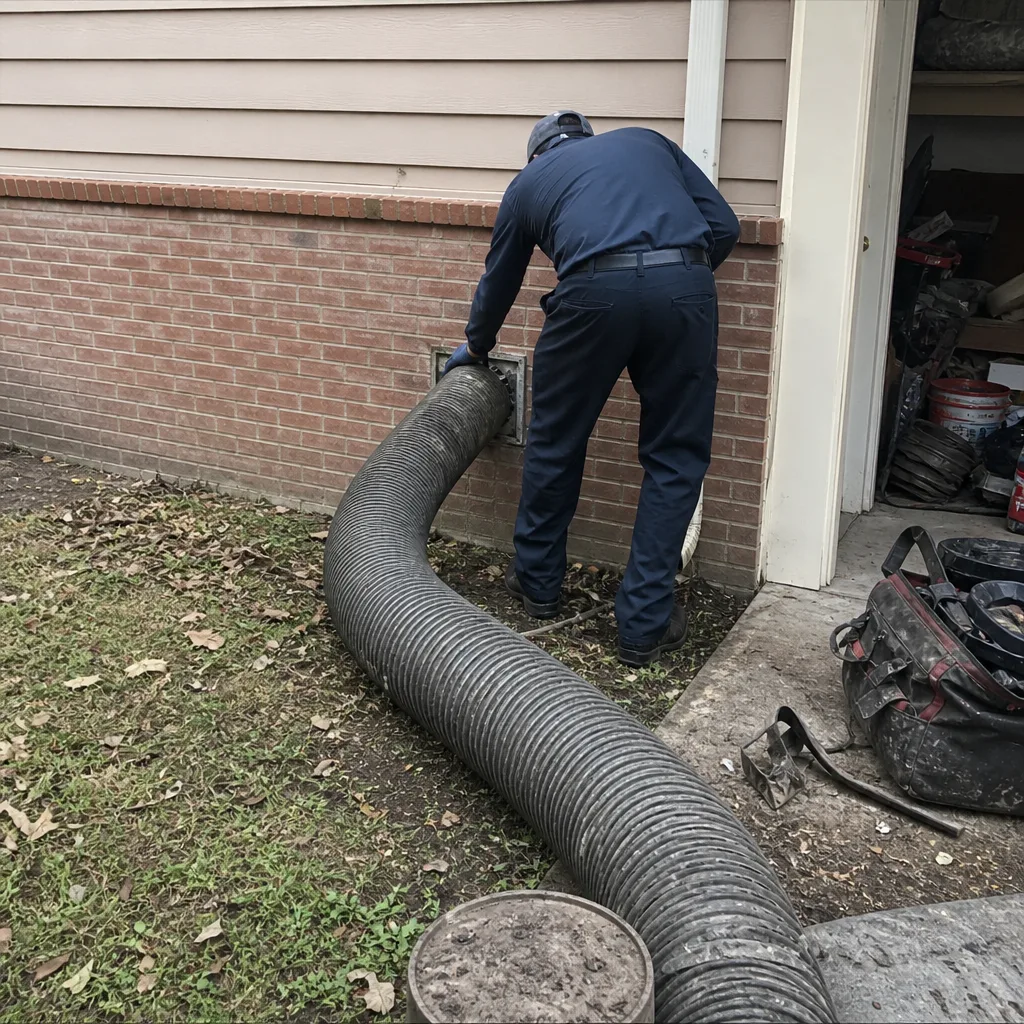 Before
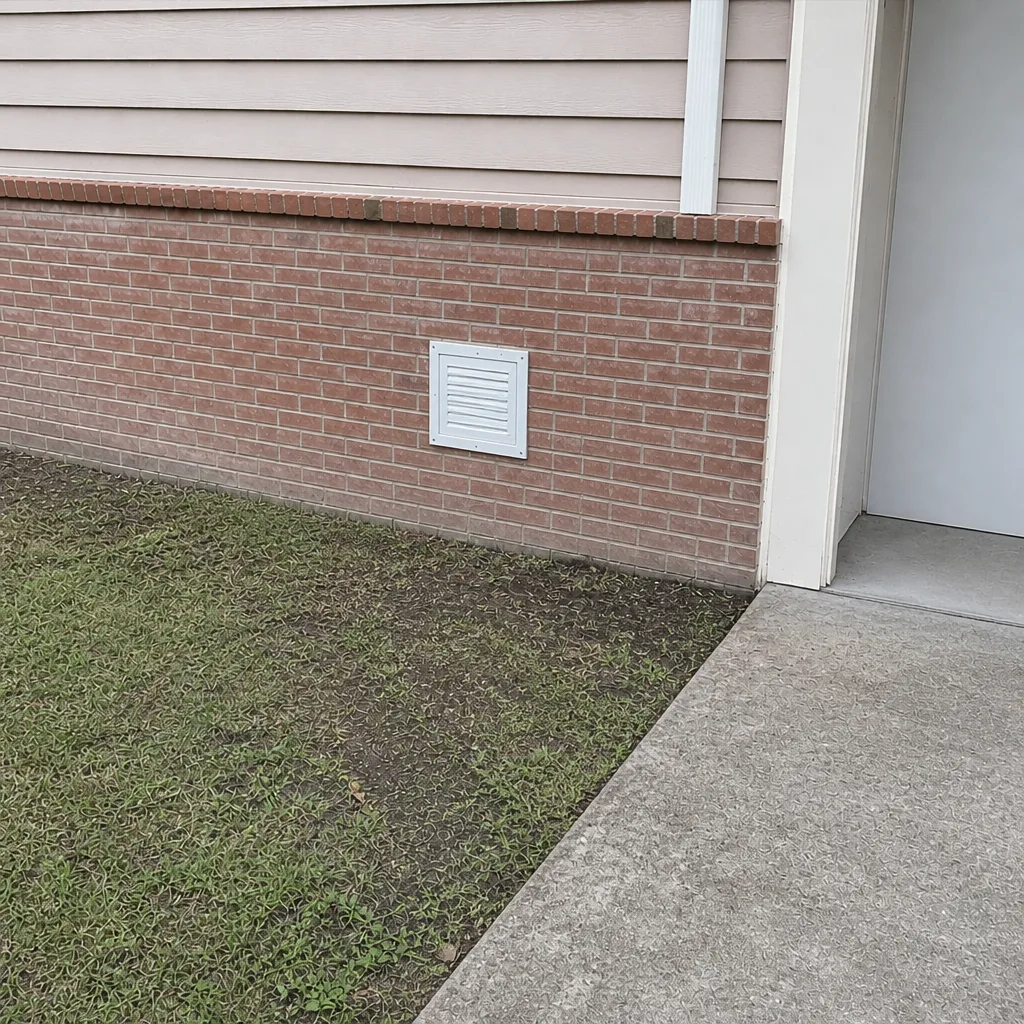 After
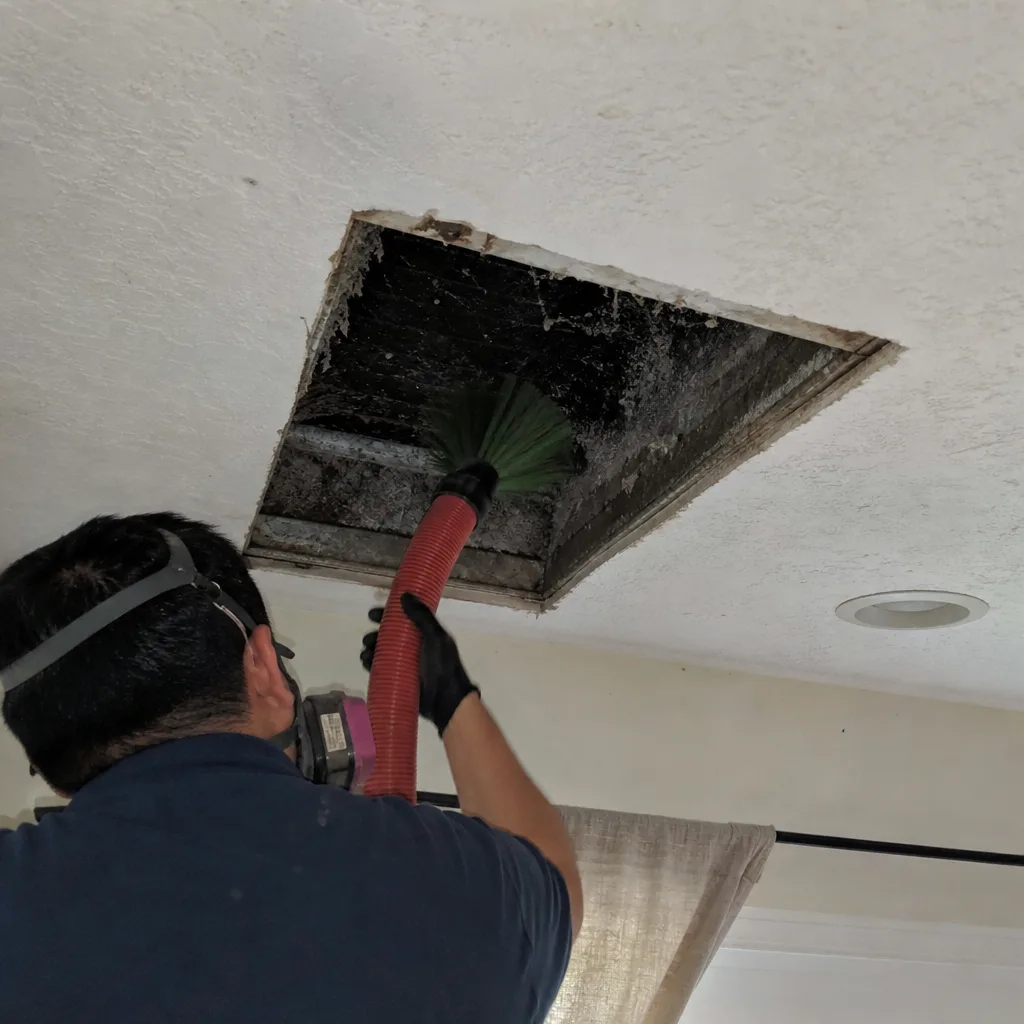 Before
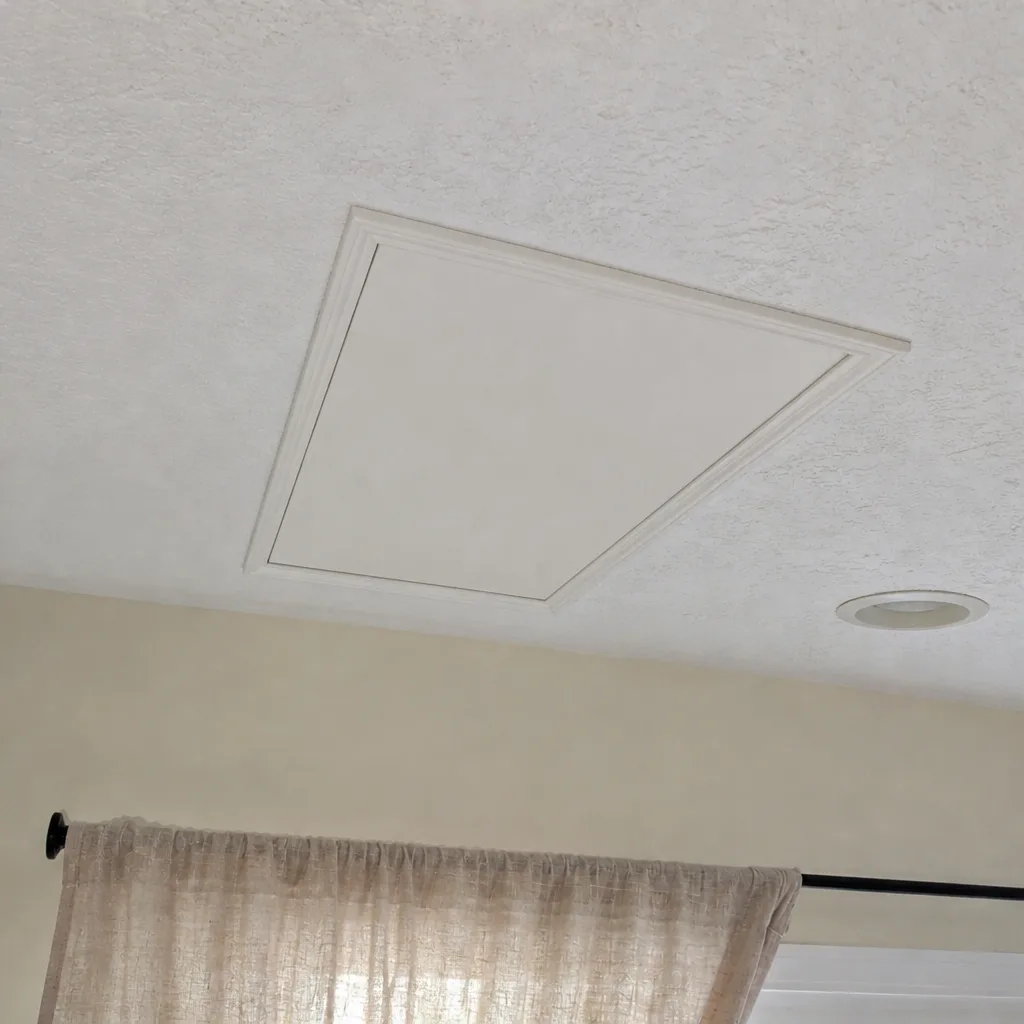 After
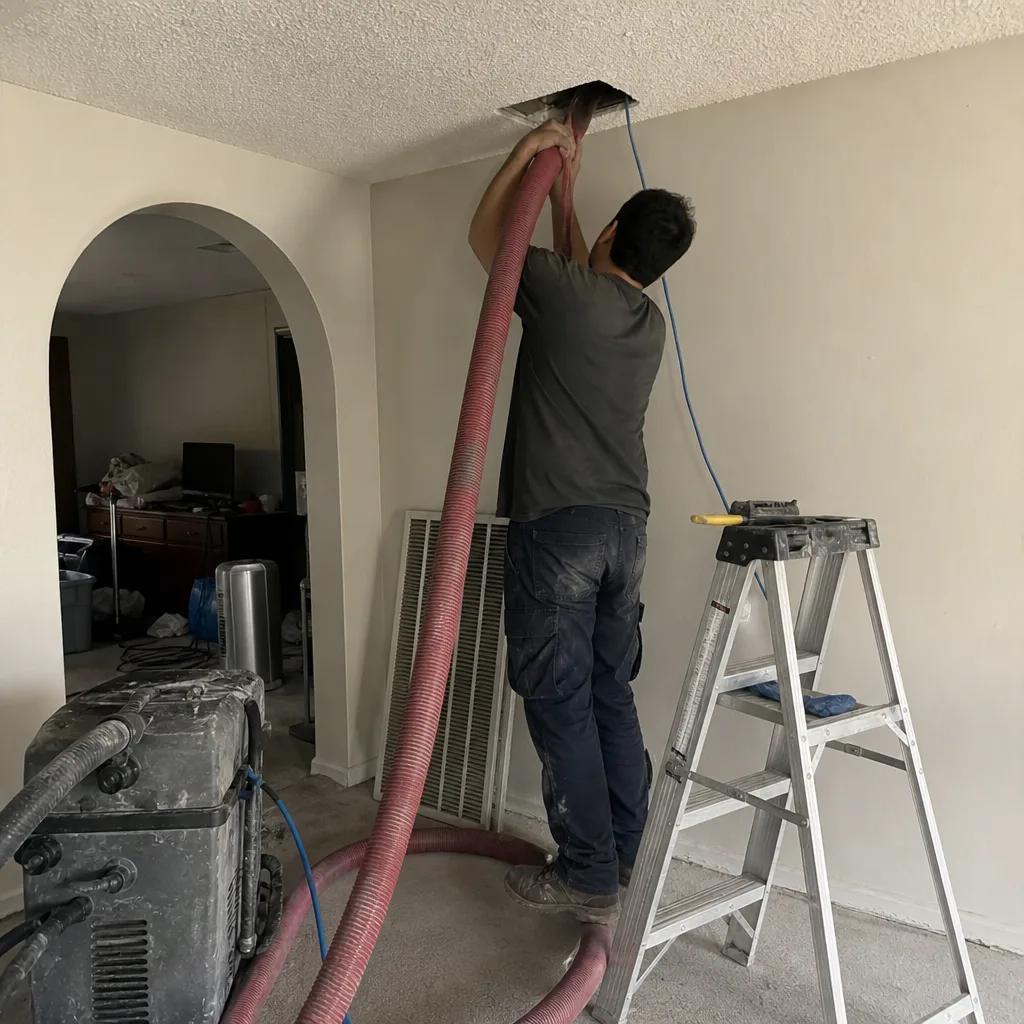 Before
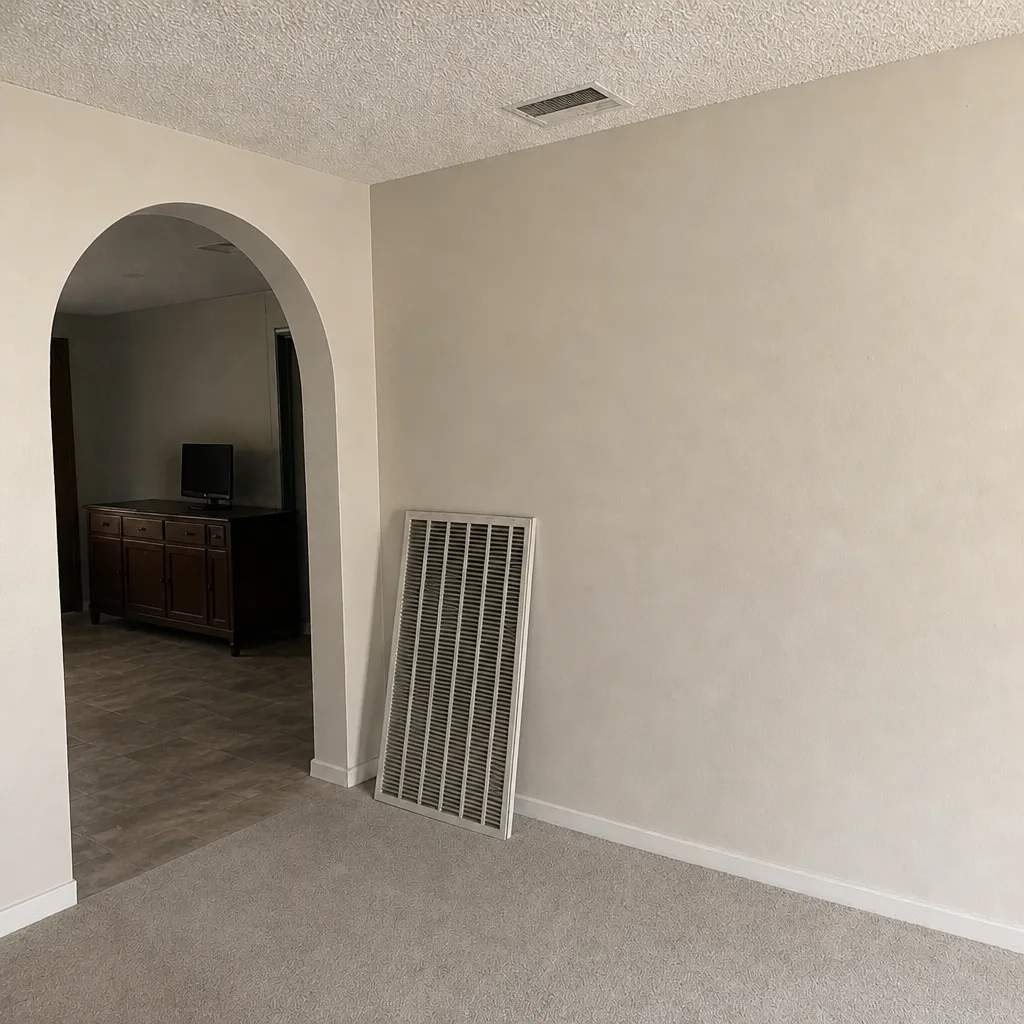 After
When to Call a Professional
Call a professional when any of these are true: visible debris buildup beyond light dusting, musty or persistent odor, uneven airflow between rooms, a recent renovation, pest evidence, or it has been several years since the last cleaning. Also call if you have torn flex duct, disconnected runs, or a system that has never been inspected. Those are conditions where DIY work risks making things worse.
What to expect on the call: a camera inspection, a whole-system estimate, one flat price agreed before work starts, and before-and-after photos of your own ducts. air duct cleaning should be quoted per system, not per vent. Air Duct Cleaning Energy Corridor offers free estimates in Energy Corridor. Call (855) 726-7308. We answer 24/7. Fast dispatch from 7am to 7pm, Sunday through Friday.
Frequently Asked Questions
No, not effectively. A shop vac can lift loose dust near a register opening, but it cannot create the negative pressure or airflow needed to clean a full duct run, and agitating debris without containment can push fine particulate into your living space. Register cleaning and filter changes are the DIY tasks worth doing; deep cleaning is not. Call (855) 726-7308 for an exact quote – estimates are free.
Typical professional cleaning runs in a whole-system range that depends on the number of runs, system size, and condition, and the written estimate sets the final price. Beware of any quote built on a per-vent figure or a teaser coupon price; those numbers tend to grow once the technician is on site. Ask for one flat price per system agreed before work starts. Call (855) 726-7308 for an exact quote – estimates are free.
Cheap quotes usually skip the expensive parts: the camera inspection, the containment setup, the air handler cleaning, and the verification photos. Some are priced per vent to look low, then expand on site. A legitimate estimate covers the whole system and holds. Call (855) 726-7308 for an exact quote – estimates are free.
Ask for before-and-after photos of your own ducts and a camera pass at the end of the job. That is the simplest verification available, and any legitimate provider should offer it without being asked. Call (855) 726-7308 for an exact quote – estimates are free.
Every three to five years is a reasonable starting interval for most homes here, though the long cooling season and summer humidity in this region can justify a shorter cycle. Homes with pets, recent renovations, or occupants with respiratory sensitivity often need it sooner. Call (855) 726-7308 for an exact quote – estimates are free.
Yes, in specific ways. Brushing through flex duct can tear the inner liner, sealing registers to concentrate suction can unbalance the system, and wetting duct board creates a growth medium. If your ducts are flex or fiberboard, leave the interior work to a professional. Call (855) 726-7308 for an exact quote – estimates are free.
The Bottom Line
The DIY vs professional question comes down to equipment, not effort. Homeowners can and should handle register cleaning, filter changes, dryer vent lint removal, and basic camera inspection – those tasks genuinely protect the system. What no consumer tool can do is create the negative pressure and airflow needed to clean a full duct run without redistributing debris into the house. The smart approach for Energy Corridor homeowners is a hybrid: frequent DIY maintenance, professional deep cleaning on a sensible interval, and duct repair and sealing whenever leaks are found. One flat price per system, agreed before work starts, with before-and-after photos to verify it. That is the whole standard.
Call (855) 726-7308 for a free estimate. We answer 24/7. Fast dispatch from 7am to 7pm, Sunday through Friday. Our technicians have up to 15 years of experience, and we work with professional-grade equipment from Rotobrush and Nikro alongside air quality products from Honeywell and Aprilaire.
Written by the team at Air Duct Cleaning Energy Corridor.