
Last updated November 25, 2026
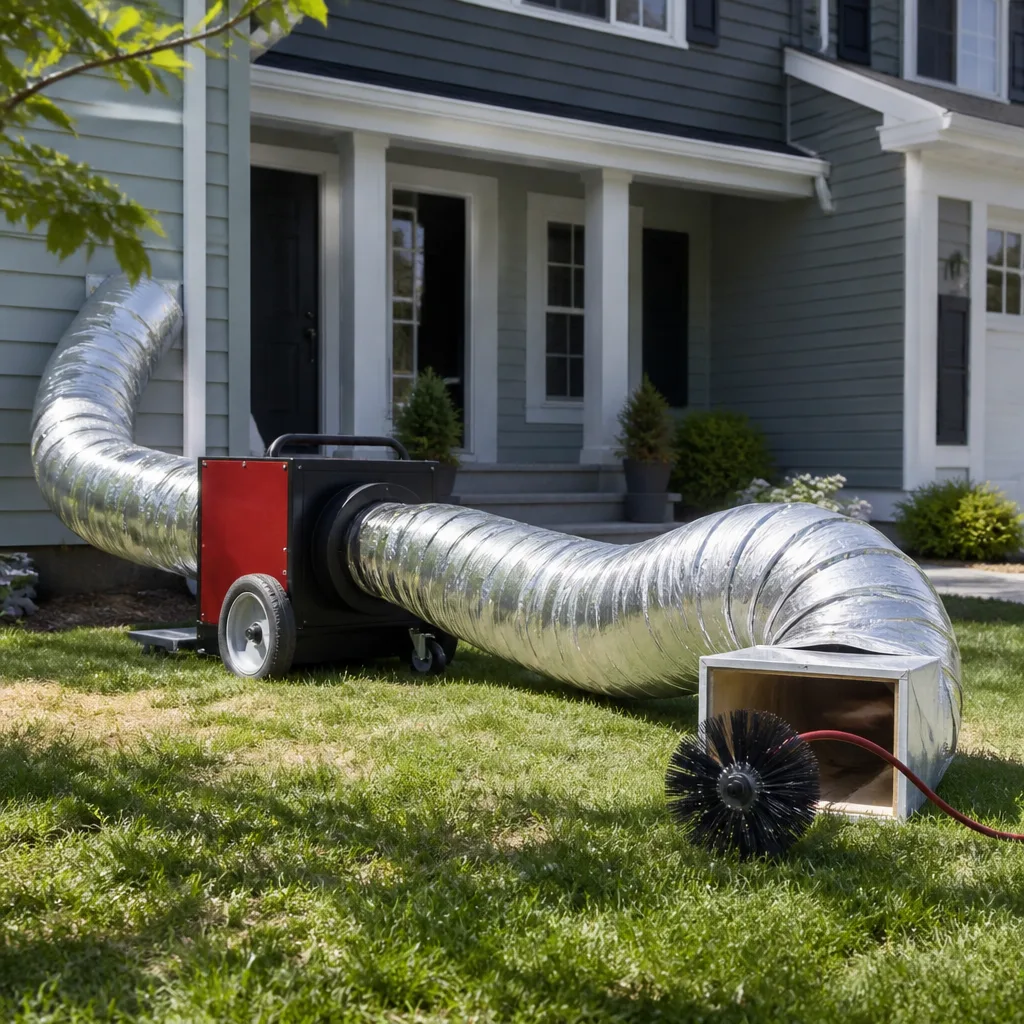 Whole-home duct cleaning
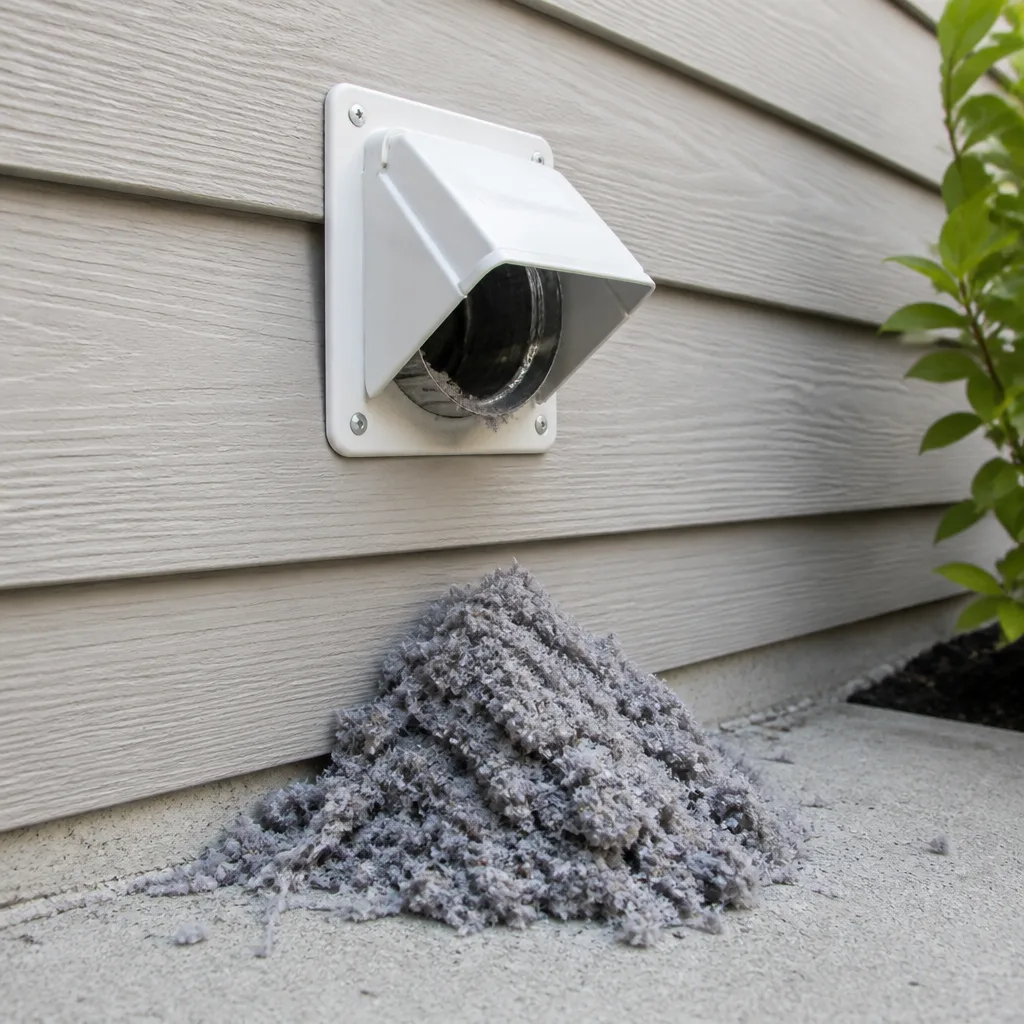 Dryer vent cleaning
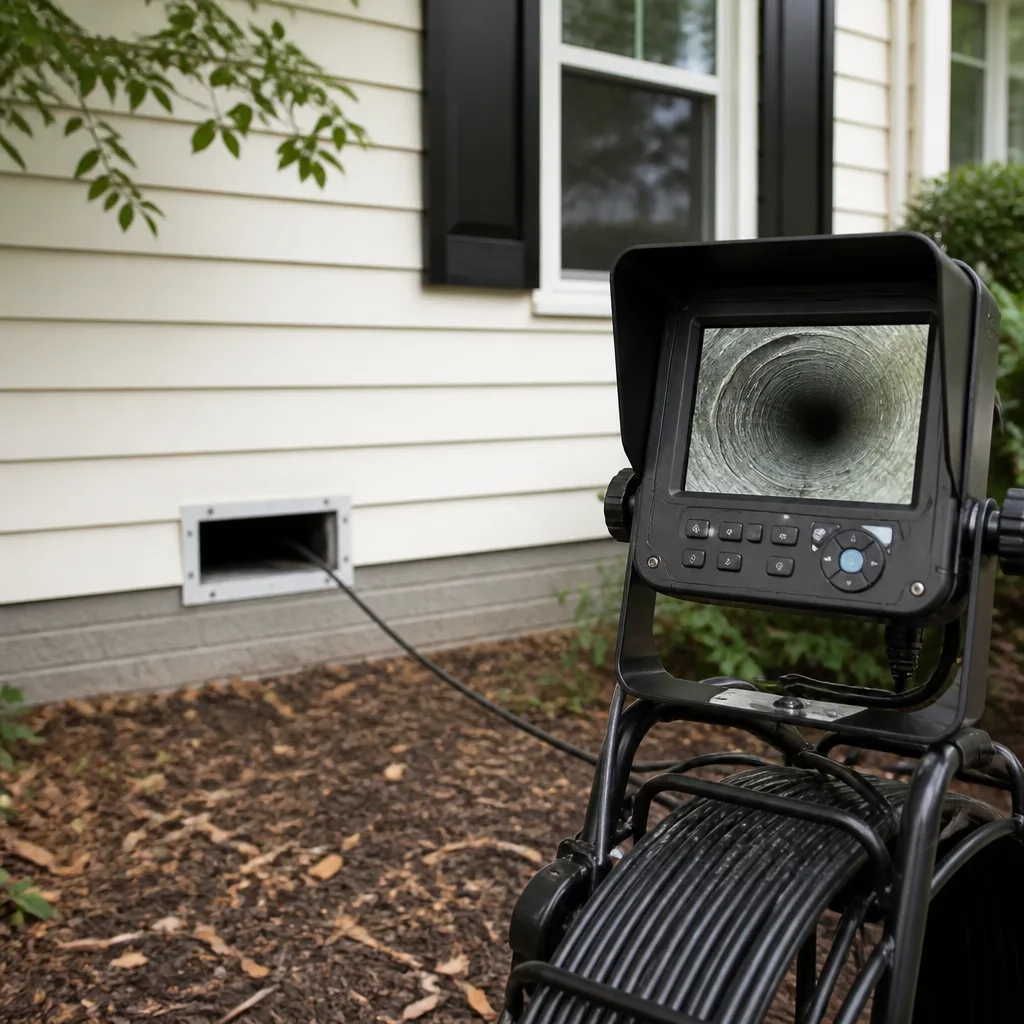 Camera inspection
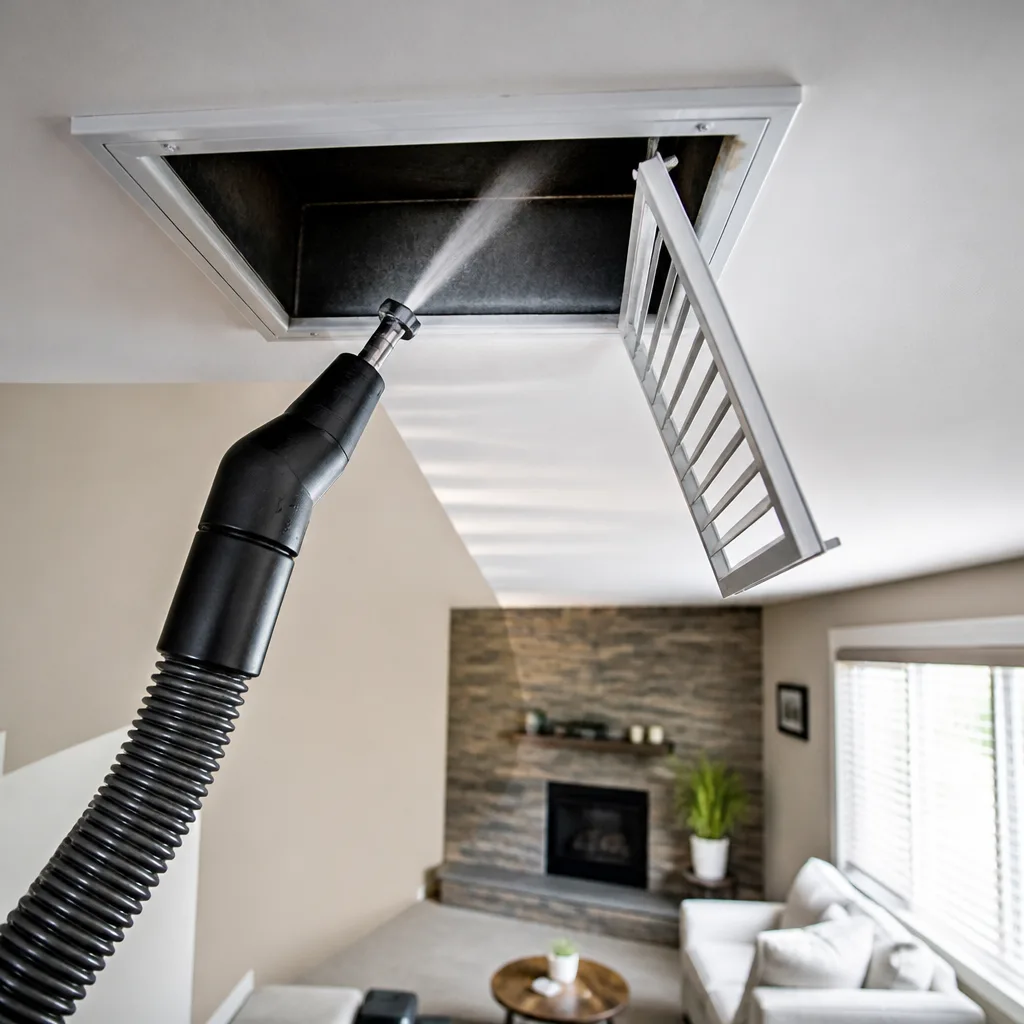 Sanitizing & deodorizing
Whole-system duct and dryer vent check with before-and-after photos - you see exactly what came out of your vents
That "$99 whole-house special" is a bait ad - the real number appears once they are in your hallway, or the "clean" is a shop-vac at the register. We photograph the inside of your ducts before and after instead.
Choosing the Right Air Duct Cleaning Brand: A Buyer’s Guide for Energy Corridor
Online reviews measure how pleasant a transaction felt, not whether your ducts actually got clean. That’s an uncomfortable thing to say in an industry that leans hard on star ratings, but it’s the truth. Most homeowners never see inside their ductwork, can’t tell a surface wipe-down from a full mechanical cleaning, and have no frame of reference for what “done correctly” looks like. So a five-star review often reflects a friendly technician and a tidy house, not a verified technical outcome. This guide is about closing that gap. You’ll learn what to actually ask a duct cleaning company in Energy Corridor before you book, which equipment and certifications matter and which don’t, how local and franchise models differ, and why the pre-inspection is the single most revealing step in the whole process.
Quick Answer
Choosing the right air duct cleaning brand in Energy Corridor comes down to evaluating operational capability, not reputation scores. Ask specifically what vacuum class and agitation tools they use, whether they work under negative pressure containment, what certifications their technicians hold, and whether they inspect and report on your system before quoting. A company that can answer those questions with specifics – and that offers repair and sealing alongside cleaning – is doing fundamentally different work than one that can only quote a flat fee over the phone.
Styles & brands we work with
- Whole-home duct cleaning
- Dryer vent cleaning
- Camera inspection
- Sanitizing & deodorizing
Table of Contents
- Why Reviews Tell You Less Than You Think
- Equipment: The Differentiator Nobody Asks About
- Certifications That Actually Mean Something
- Scope of Service: What “Duct Cleaning” Should Include
- Local vs. National Franchise in the Energy Corridor Market
- The Pre-Inspection Standard
- Questions to Ask Before You Book
- Common Mistakes to Avoid
Why Reviews Tell You Less Than You Think
Reviews are a useful starting filter. They’re a terrible final one. Here’s why: the things that generate glowing reviews in this trade are punctuality, politeness, leaving the house tidy, and not pressuring the homeowner. All good. None of them prove the technician actually cleaned the far end of the trunk line, restored proper airflow at the registers, or could tell you the static pressure reading before and after. You can’t review what you can’t see.
Air duct cleaning in Energy Corridor is a service performed inside a closed system. The output is invisible to the customer in real time. That asymmetry is exactly why reviews drift away from technical reality – and exactly why you need a different evaluation framework.
Three things make a review genuinely informative:
- Specificity about the work. Reviews that mention before-and-after photos, a system condition report, or a described repair carry more weight than “great job, very professional.”
- Evidence of scope. Did the company clean the air handler and coil, or just the visible ducts? Reviews that reference the furnace closet, the return chase, or the blower compartment suggest the crew went past the surface.
- How complaints were handled. Read the two- and three-star reviews first. How a company responds to a complaint tells you more about its standards than twenty five-star entries.
None of this means ignore reviews. It means treat them as the beginning of due diligence. The questions below are the rest of it. If you want to see how a full-system approach is described to homeowners in this market, our Air Duct Cleaning Energy Corridor page lays out the five-service scope we work from.
Equipment: The Differentiator Nobody Asks About
Two duct cleaning companies can both show up in a marked vehicle, both smile, both charge similar money, and do completely different jobs – because their equipment is different. This is the biggest blind spot in the consumer market. Equipment determines what’s physically possible on your system.
There are three things to ask about.
1. Vacuum capacity and negative pressure containment
A truck-mounted or high-CFM portable vacuum pulls the debris out of the system while it’s being agitated. More importantly, the system should be under negative pressure, meaning air flows into the ducts and out through the vacuum, not into your living room. Ask:
- What CFM rating does the vacuum meet or exceed? (You’re looking for a high-volume industrial vacuum, not a shop vac.)
- Is the system placed under negative pressure with sealed registers during cleaning?
- Where does the exhaust air discharge?
If the answer is vague or the crew shows up with a small handheld unit, the work will be surface-level by definition. Professional-grade equipment isn’t a marketing line – it’s the physical constraint on what the cleaning can accomplish.
2. Agitation method
Vacuum alone doesn’t move adhered debris. Something has to break it loose. The agitation method is where you see the real differences:
- Contact agitation – a rotary brush or whip physically contacts the duct walls. Rotary brushes loosen adhered dust and scale from round pipe and rectangle duct; air whips work well in flexible duct and branch runs where a brush won’t reach.
- Compressed air – nozzle-based agitation used in combination with the brush or whip, not usually as a standalone.
- “Air-only” cleaning – if the only tool is airflow, contamination stuck to the walls stays there.
We run Rotobrush rotary systems and Nikro equipment specifically because they combine mechanical agitation with high-volume extraction – the two work together. That’s not a brand announcement; it’s the reason we can clean a trunk line and a branch run in the same visit and get both.
3. Access and sealing
Good crews cut and reseal access ports rather than working only through registers. Ask whether they drill access into the trunk and how they seal it afterward. Cleaned ducts that leak at the seal points don’t stay clean.
Certifications That Actually Mean Something
Every duct cleaning company in Energy Corridor can print “certified” on a truck. Very few can show you what the word refers to. There are two credentials worth knowing by name, because each requires real investment to obtain.
NADCA membership
NADCA is the National Air Duct Cleaners Association – the trade body that publishes the industry’s technical standards. Members are expected to follow its assessment, cleaning, and restoration standards. Membership signals that a company has at least engaged with the professional framework. It’s not the same as an individual certification, but it’s a floor, not a ceiling.
ACAC credentialing
ACAC is the American Council for Accredited Certification. It certifies individual technicians, not companies, and requires documented experience plus a written exam. If a company uses the ACAC credential as a selling point, ask how many technicians on a standard crew hold it. A credential on the owner’s wall doesn’t help if the people in your home aren’t trained to the same standard.
What to do with this:
- Ask the company directly which credentials they hold and whether they are membership of an association or an individual certification.
- Ask whether the crew arriving at your home is trained and certified, or whether certification belongs to someone who isn’t coming.
- Ask whether the company follows a published cleaning standard, and which one.
Companies that can answer these questions clearly have made a real investment in professional practice. Companies that can’t have not. That’s a meaningful signal about how the work will actually be done.
Scope of Service: What “Duct Cleaning” Should Include
Here’s a short test. Read a company’s standard service description. If it doesn’t mention the air handler, the evaporator coil, or the return system, it isn’t offering full-system cleaning – it’s offering duct surface cleaning and calling it the same thing. They are not the same thing.
A complete cleaning covers the whole air pathway, not just the visible runs. That means:
- Supply ducts and registers. The visible system, cleaned from the register back to the trunk.
- Return system and grilles. The return side draws air in, and it carries a heavy particulate load. Many “duct cleanings” skip it entirely.
- Air handler and blower compartment. The blower wheel accumulates dust that gets redistributed every time the system runs.
- Evaporator coil. A dirty coil reduces heat transfer and can be a source of musty odor plus microbial growth in the wet airstream.
- Dryer vent. Separate from the HVAC system but part of whole-home safety, and a service many cleaning-only companies don’t do.
Two adjacent services matter as much as cleaning itself. Duct repair and sealing fixes the gaps that let air loss and contamination back in after cleaning, and air quality and sanitizing goes beyond dust removal to treat biological contamination with products like Abatement Technologies and Guardsman. We also work with leading filtration brands including Honeywell and Aprilaire to address the filters and system-wide health of the air, not just the ducts. A company that can only clean – and can’t repair, seal, filter, or sanitize – leaves you to call a second contractor for the rest, which means nobody owns the final result. Air Duct Cleaning Energy Corridor covers that full chain under one service scope. You can see the technical detail on our air duct cleaning page.
Local vs. National Franchise in the Energy Corridor Market
Energy Corridor’s housing stock is a mix of townhome and apartment communities, single-family homes in the surrounding subdivisions, and a substantial rental and property-management presence clustered around the Energy Corridor employment corridor. That mix changes what a duct cleaning company needs to be good at. Rentals need durable, documented results a property manager can hand to an owner. Residential homes with two-story attics and long trunk runs need equipment that can reach the far registers. The local-first and franchise models tend to excel and fall short in different places.
What the franchise model gets right
- Consistent branding and a service experience you can predict.
- Corporate-issued scripts that set expectations for calls and scheduling.
- Wide geographic reach if you’re moving between metros.
Where the franchise model tends to cut corners
- Uniformity means the equipment and standard are set for the whole network, not for what a given system in a given market needs. Local judgments are constrained.
- Franchisees often push volume, which pressures crews to compress the job and skip the inspection step.
- Repair and sealing are frequently outside the franchise’s standard scope, so the “clean” is really a “clean and leave it.”
- Ownership of a complaint can get tangled between the local operator and the corporate brand.
What the strongest local model gets right
- Equipment and methods selected for the actual housing stock in the market.
- Faster escalation when a job needs a judgment call – because there’s no national script to defer to.
- Repair, sealing, sanitizing, and filtration offered alongside cleaning, so a single scope covers the system.
- Property managers in Energy Corridor can build a working relationship with the same team over time.
Neither model is automatically better. The point is that you should know which one you’re buying from and what trade-offs come with it. Ask a franchise specifically whether the local operator has the equipment and scope to repair and seal, and ask a local operator specifically how they train and certify their crews. Both questions sort real capability from brochure copy.
The Pre-Inspection Standard
This is the test that separates professionals from quote-callers. A reputable duct cleaning company inspects your system and provides a condition report before quoting a cleaning price. If a company will happily quote a number over the phone without seeing the system, it isn’t quoting your job – it’s quoting an average. And you’ll be paying for whatever falls outside that average.
Here’s how the pre-inspection should go:
- Visual inspection of the accessible ductwork. Registers, trunk lines, and the return side. Not just the reachable register closest to the door.
- Air handler and coil check. Blower wheel condition, coil condition, filter status, and any visible biological growth.
- Leak and seal check. Gaps at joints, disconnected runs, and register boots that aren’t sealed. These are why the system loses air and re-contaminates.
- Static pressure or airflow measurement where relevant, to establish a baseline you can compare against after cleaning.
- A written condition report with findings and photos, plus a written estimate for the work recommended. The price you agree to is the price you pay.
If a company refuses the inspection, or quotes a firm number without it, that’s the most informative thing you’ll learn about them. Walk away. In our experience, the inspection is where a company with real capability and a company without it look most different. It’s also where a repair recommendation – a leaking joint, a disconnected branch, a coil that needs addressing before a clean is even worth doing – actually gets discovered. You can see how we handle that on our HVAC cleaning page, which covers the air handler and coil side of the system.
Questions to Ask Before You Book
Bring this list to the phone call. The answers will tell you almost everything.
- What vacuum do you use, and what’s its CFM rating? High-volume industrial, or shop-vac scale?
- How do you agitate the ducts? Rotary brush, air whip, or air-only? Which and why for my system?
- Do you work under negative pressure with sealed registers? Yes is the only good answer.
- Which certifications do you hold, and are the technicians on my job certified? Specifics please.
- Does the standard service include the air handler, evaporator coil, and return side? If not, what’s excluded and what’s the price for a full system?
- Do you offer duct repair and sealing? If yes, you’re dealing with a company that can fix the root cause. If no, expect to call someone else after the clean.
- Will you inspect and provide a written condition report before quoting? A no here ends the conversation.
- What does the final price cover, and is it flat per system? Watch for pricing that changes once the technician is on site.
- Do you provide before-and-after photos of my own ducts? You should see the work, not take it on faith.
- Do you also clean dryer vents? If you want the whole-home ventilation system covered, this belongs on the same visit. Our dryer vent cleaning page explains why that’s a fire-safety issue and not just a lint issue.
Common Mistakes to Avoid
- Booking on a coupon price alone. A low advertised number that balloons once the technician is on site is the classic bait-and-switch in this trade. Ask for a written estimate on a flat price per system, and confirm the inspection happens first.
- Accepting a quote without an inspection. If the company can price your ducts blind, it’s guessing. You’ll be paying for the guess and the correction later.
- Skipping the air handler and coil. Surface-level duct cleaning leaves the blower wheel and coil dirty, so the system re-contaminates itself every cycle. Confirm those parts are in the scope in writing.
- Assuming cleaning is enough without sealing. Unsealed joints and disconnected runs leak the air you just paid to clean. Repair and sealing is what keeps it clean. If a company doesn’t offer this, the clean is only half the job.
- Not asking about property-manager documentation. For rentals in Energy Corridor, you need a condition report and before-and-after photos you can pass to the owner. Confirm the company provides them by default.
- Ignoring the dryer vent. A dryer vent that clogs is a real fire risk, and it’s often skipped when it’s treated as part of the cleaning bundle. Ask separately whether the dryer vent is cleaned with mechanical agitation under containment, or just vacuumed at the outside flap.
- Choosing the company that answers the phone fastest instead of the one that answers your questions. Speed of response is nice. Capability is what you’re buying. Take the ten minutes to ask the ten questions.
See the difference
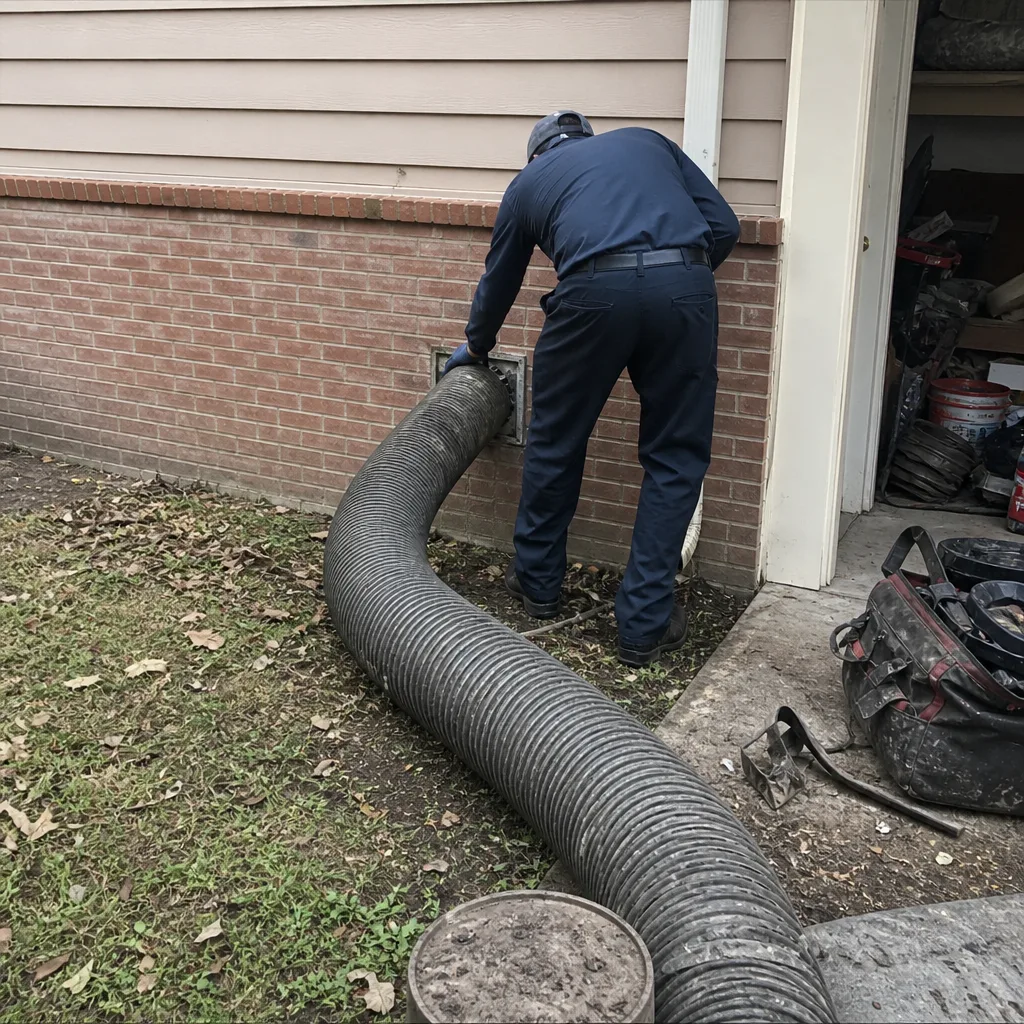 Before
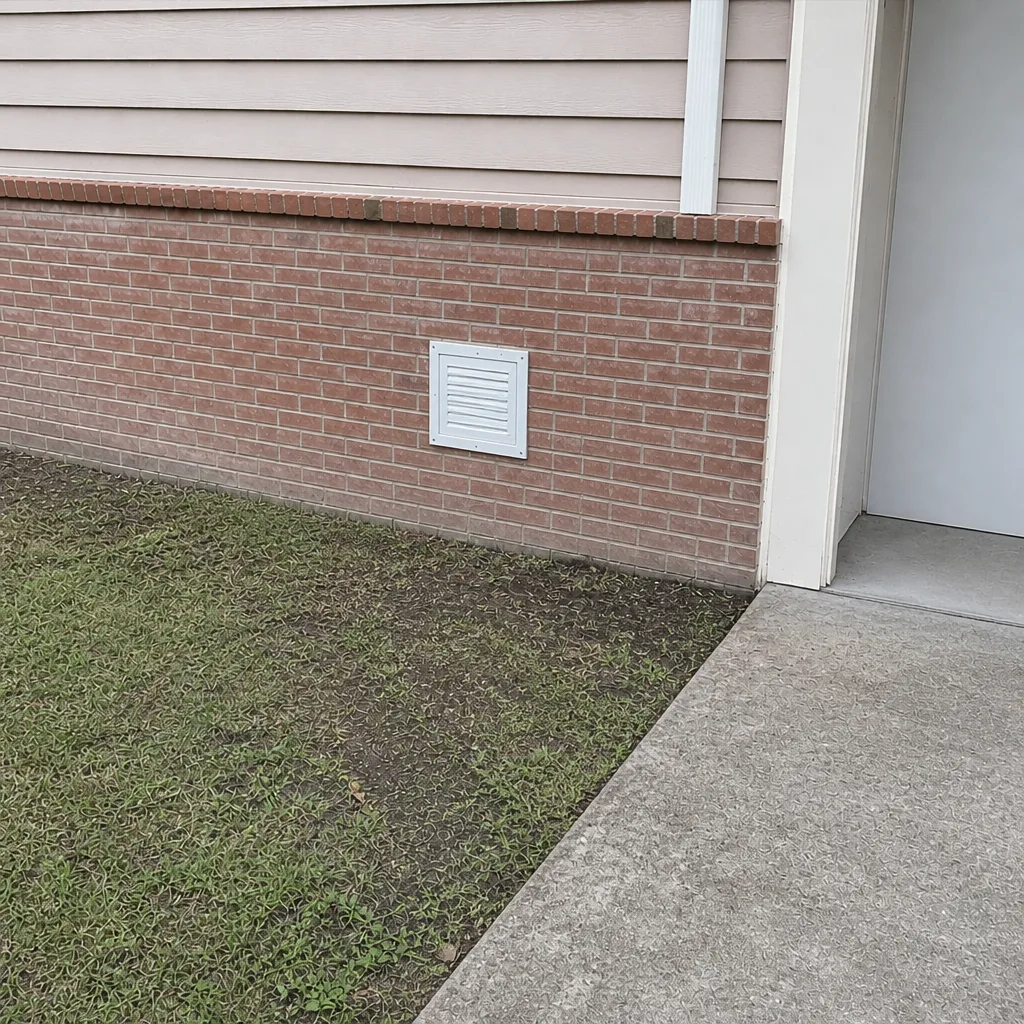 After
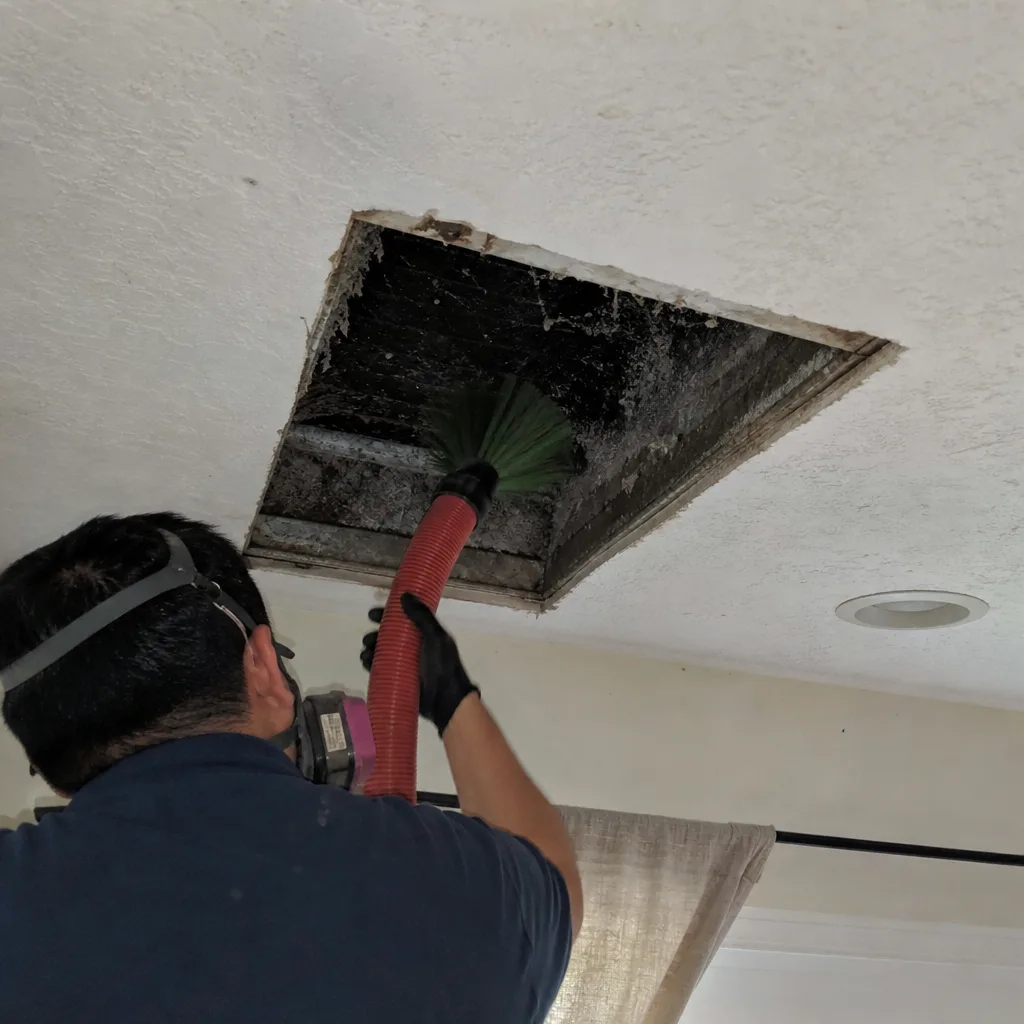 Before
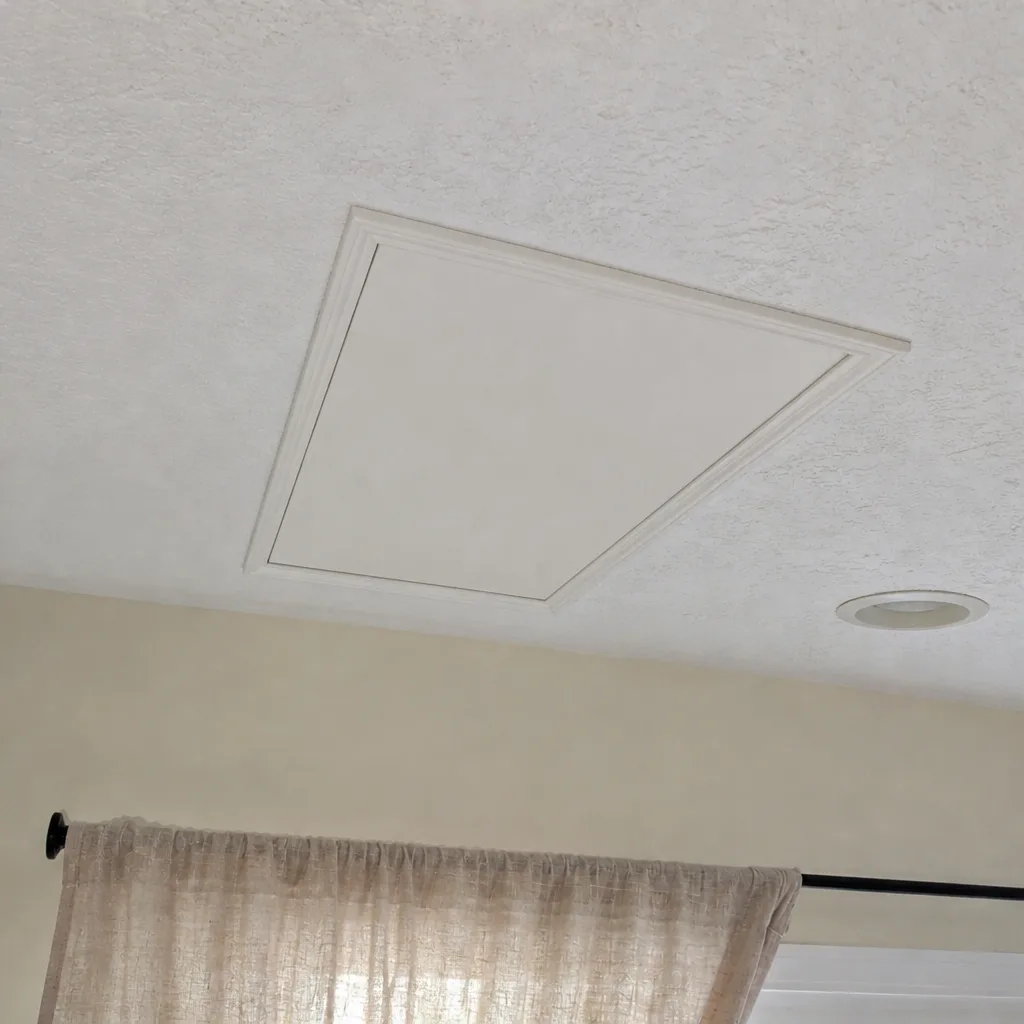 After
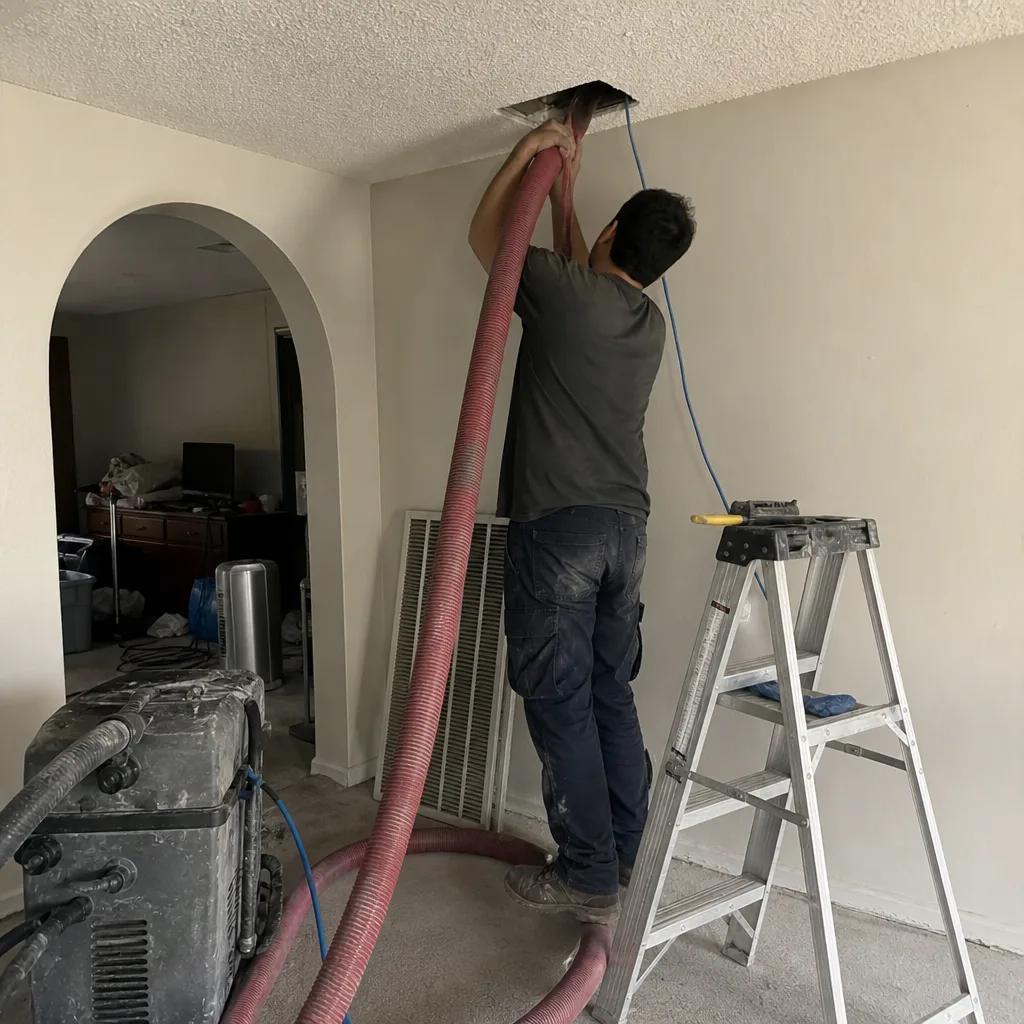 Before
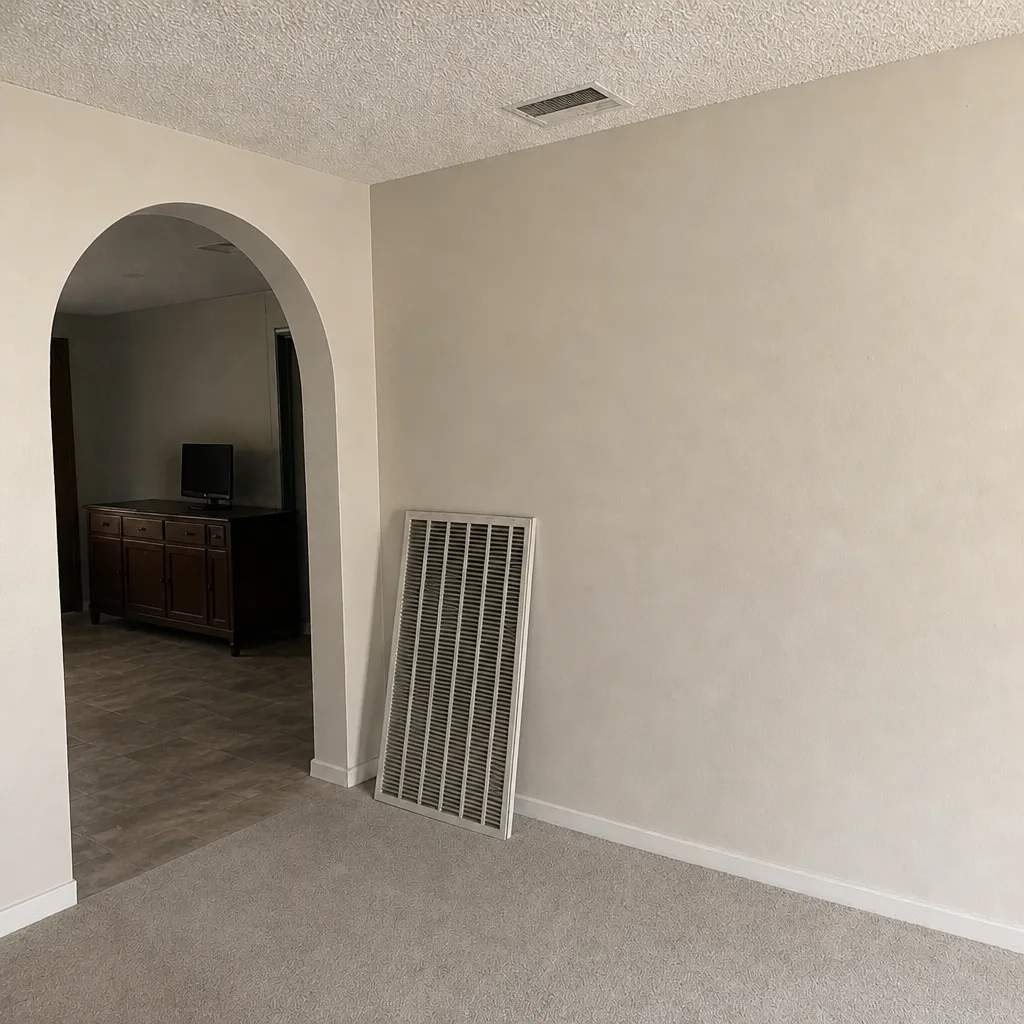 After
When to Call a Professional
If your ducts haven’t been inspected since you bought the home, if you’re seeing visible dust buildup around the registers or streaks on the ceiling, if there’s a musty smell when the AC runs, if one side of the house is noticeably warmer or cooler than the other, or if your utility bills have crept up without an obvious cause – those are the signals to bring in a professional. Homeowners with pets, recent renovation dust, or a rental property that’s changed tenants recently have the same case. A musty smell after a long cooling season and uneven airflow between rooms are worth a second look in Energy Corridor’s mild, humid summers, where the cooling coil runs long and stays wet. Air Duct Cleaning Energy Corridor offers free estimates in Energy Corridor – call (855) 726-7308.
Frequently Asked Questions
Compare their answers to the ten questions above, not their star ratings. Equipment, agitation method, containment, certifications, and whether they offer repair and sealing are the real differences. Two companies with similar ratings may offer completely different scopes. Ask both for a written inspection report and a flat price per system before you decide.
Supply ducts, registers, return system and grilles, air handler, blower, and evaporator coil – plus a written condition report and before-and-after photos of your own ducts. If any of those are excluded, ask what the price is for a complete system. If the company can’t produce a written scope that names all of them, the quote isn’t really comparable to a full-system one. Call (855) 726-7308 for a written estimate that itemizes the scope.
Yes. Better equipment is the physical constraint on what the cleaning can accomplish. A high-volume vacuum under negative pressure with rotary agitation removes debris that a lower-class vacuum and air-only cleaning cannot. The difference isn’t cosmetic. Paying less for a cleaning that doesn’t reach the trunk line often means paying twice – once for the clean, and then again for the repair or the second attempt.
Cheap quotes usually reflect a narrower scope, not better value. Common shortcuts include surface-level register cleaning, skipping the air handler and coil, no negative pressure containment, no repair and sealing, and pricing that gets adjusted upward once the technician is on site. A written flat price per system agreed before work starts is the honest comparison. Call (855) 726-7308, and we’ll inspect and quote on a flat price per system.
You should see it. Before-and-after photos of your own ducts, a written condition report, and a scope that lists what was cleaned should all be part of the service. If a company can’t provide them, you have no way to verify what happened inside a closed system. Ask before booking, and confirm the photos are provided even if you never ask.
Not every company will offer it, but the ones that do are generally better positioned to solve the actual problem. Cleaning removes contamination. Repair and sealing prevents it from coming back through leaking joints and disconnected runs. If your company only cleans, you may end up with a short-lived result that needs a second contractor to fix the root cause.
The Bottom Line
Reviews measure how a job felt. Equipment, certifications, scope, and the pre-inspection measure what it actually was. Bring the ten questions to your next call, insist on a written condition report before any quote, and give priority to any company that combines cleaning with repair and sealing, sanitizing, and filtration under one scope. That combination – full-system capability on professional equipment with full-system accountability – is the differentiator that actually shows up in your ductwork, your air quality, and your energy bills. Air Duct Cleaning Energy Corridor offers free estimates in Energy Corridor – call (855) 726-7308. We answer 24/7. Fast dispatch from 7am to 7pm, Sunday through Friday. A call outside dispatch hours is booked into the next opening, Sunday through Friday, 7am to 7pm.
Written by the team at Air Duct Cleaning Energy Corridor.